FM makes first Canada visit in 10 yrs; trip signals growing interest from both sides in stabilizing ties: Chinese expert

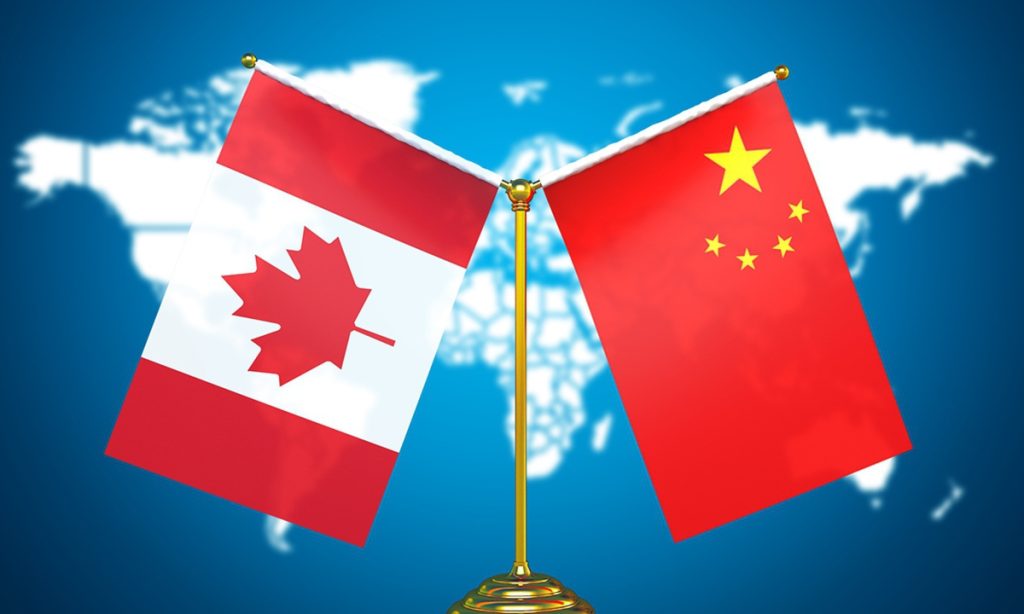
Chinese Foreign Minister Wang Yi is expected to begin a three-day visit to Canada from Thursday to Saturday at the invitation of Canadian Foreign Minister Anita Anand, a trip that has drawn wide attention from Canadian political and media circles amid improving bilateral ties.

The visit marks the first trip to Canada by a Chinese foreign minister in a decade, which a Chinese expert believes shows growing interest in stabilizing and expanding China-Canada relations at a time of shifting global trade dynamics.

At the invitation of Canada's Minister of Foreign Affairs Anita Anand, Foreign Minister Wang Yi will visit Canada from May 28 to 30, according to an earlier announcement of the Chinese Foreign Ministry.

Canadian Prime Minister Mark Carney told reporters Wednesday that he looks forward to the Chinese minister's visit and will meet with him personally. He said the visit will offer a "valuable exchange of views", the Canadian Press reported Wednesday.

Canadian International Trade Minister Maninder Sidhu said Tuesday that the planned visit offers a positive sign on the state of the Canada-China relationship, according to the report. 

"It shows that our relationship is growing in the right direction," Sidhu told The Canadian Press.

Canadian media have also highlighted the economic dimension of the visit. According to a report by the Globe and Mail, the Chinese and Canadian foreign ministers are expected to discuss expanding two-way trade during the visit, including progress in the opening of the Canadian market to 49,000 Chinese-made electric vehicles this year, citing a Canadian source familiar with the trip.

The media outlet also noted that their meeting "is a sign of blossoming relations between Canada and China under Carney, who is trying to diversify foreign trade away from the increasingly protectionist US."

"The Chinese Foreign Minister's Canada visit is expected to further implement a series of outcomes achieved following high-level exchanges between the two sides," Huang Zhong, deputy dean of the Academy of International and Regional Studies at Guangdong University of Foreign Studies, told the Global Times on Thursday.

Huang added that since taking office, Carney has promoted "middle power multilateralism," and closer cooperation with China could help Canada broaden its diplomatic options, enhance its international standing, and further advance its foreign policy agenda.

At a regular press briefing last week, Chinese Foreign Ministry spokesperson Guo Jiakun announced Wang's visit and said that during the visit, Wang will have in-depth exchanges with the Canadian side on how to implement the important common understandings at the leadership level and the outcomes of Prime Minister Mark Carney's recent China visit in January, and how to build a truly substantive China-Canada new strategic partnership, as well as international and regional issues of mutual interest.

Huang said that China and Canada are currently advancing efforts to build a China-Canada new strategic partnership, adding that cooperation in areas such as electric vehicles and agricultural products is expected to deepen following Wang's visit.

"At the same time, China and Canada are also expected to pursue deeper cooperation in artificial intelligence, academic exchanges and institutional cooperation," Huang said.

Beyond trade and technology, Huang noted that China and Canada hold similar positions on issues including non-traditional security challenges, climate change, opposition to unilateralism, and support for free trade, creating further room for bilateral cooperation.

According to a release issued by Global Affairs Canada on May 22, the ministers will meet in Ottawa to advance pragmatic engagement and the implementation of the updated Canada-China Strategic Partnership, including on trade and investment, global security, as well as respective bilateral issues.

The release also highlighted the extensive ties between the two countries, stating that strong people-to-people ties link Canada and China. Over 1.7 million Canadian residents are of Chinese origin. Tourism flows and ongoing cultural exchanges enrich bilateral linkages. 

It further noted that China remains an important commercial market for Canadian businesses, with two-way bilateral merchandise trade in 2025 totaling $125.1 billion, representing a 5.2 percent increase over 2024.

Canadian scholars and analysts have also expressed expectations for the meeting between the two foreign ministers. Jeff Mahon, former deputy director at Global Affairs Canada's China Division, described the meeting as "a natural milestone in the path to not only normalizing but also deepening bilateral relations," according to the Institute for Peace & Diplomacy, a North American non-profit and non-partisan international affairs think tank.

Mahon also said that "increasing trade with China and determining for itself the nature of its relationship with China will be key to maintaining real autonomy and sovereignty."

Chinese Foreign Ministry spokesperson Guo also expressed hopes for the visit's broader significance for bilateral ties. It is our hope that through this visit, the two sides could enhance political mutual trust, expand mutually-beneficial cooperation, properly manage differences, and ensure that bilateral ties will continue to move forward on the track of sound, steady, and sustainable development to deliver more benefits to both peoples, Guo said.

3 dead, 19 missing after heavy rain lashes SW China's Chongqing

Three people were killed and another 17 were unaccounted for after heavy rain battered Yongchuan District in southwest China's Chongqing Municipality starting Saturday night, said local authorities.

In addition, two people were also unaccounted for after the rain lashed Beibei District in the municipality.

Rescue and response efforts are currently underway in full swing.

Starting from 2 p.m. Sunday, Chongqing has adjusted Yongchuan District to a Level-I flood control emergency response at the municipal level, 29 districts and counties, such as Rongchang District and Beibei District, to a Level-II response, and nine districts and counties, including Yuzhong District, to a Level-III response, said the flood control and drought relief headquarters of Chongqing.

The Chashanzhuhai subdistrict of Yongchuan District logged the maximum rainfall of 296.6 mm between 2 a.m. and 4 a.m. Sunday, with a maximum hourly rainfall intensity of 103.6 mm, according to the on-site command headquarters for flood control and rescue operations.

The maximum rainfall in Xinglong Town in Beibei District reached 122.9 mm between 12 a.m. and 3 a.m. Sunday, with a maximum hourly rainfall intensity of 59.4 mm, said the district's emergency management bureau.

Heavy rains have hit 22 districts and counties in Chongqing, and the water levels of 22 rivers in the municipality have exceeded the warning level, according to Chongqing's hydrological monitoring station.

The China National Commission for Disaster Reduction on Sunday activated a Level-IV emergency response for floods and geological disasters in Chongqing.

A work team has been dispatched to the disaster-hit areas to assess the situation on the ground and assist local disaster relief efforts, including ensuring the basic living needs of affected residents, according to the Ministry of Emergency Management.

Blinken claims US would ‘lose’ one-on-one competition with China; analyst says the proposition serves as a political excuse and bloc confrontation mentality will only backfire on US allies

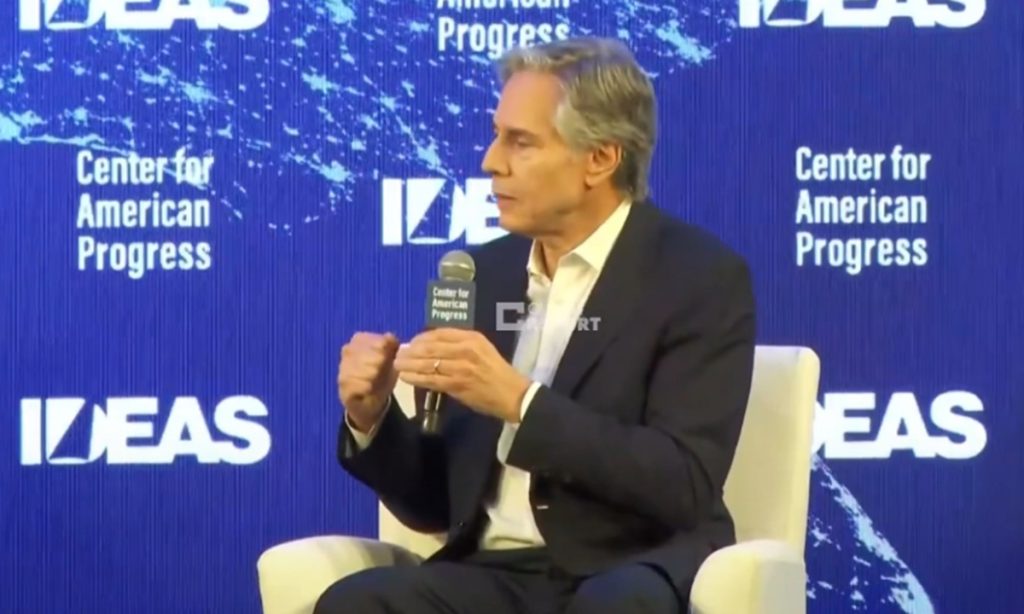
Former US secretary of state Antony Blinken's claim that the US would lose if it "competed one-on-one" with China has sparked debate on social media X, after he cited China's market size, manufacturing capacity, academic output and patents to argue that Washington must work with allies and partners to make it "harder" for China to "ignore."

The remarks, made at the Center for American Progress (CAP) annual 2026 IDEAS Conference and was reported by Clash Report, quickly sparked discussion on social media, with many netizens opposing Blinken's views, though a smaller number of commenters expressed support for them.

Their opinions were divided, with some accusing the US of using its alliance system to exploit partners or blaming past US policies for hollowing out American manufacturing, while others questioned why Europe should follow Washington in confronting China.

Li Haidong, a professor at China Foreign Affairs University, told the Global Times on Thursday that the idea of one-on-one competition itself is a false proposition, arguing that China and the US should pursue mutual benefit and win-win cooperation rather than confrontation. He said claims that the US would "lose" in direct competition with China serve as a political excuse for some US politicians to rally allies to contain China and engage in bloc confrontation.

Some netizens expressed similar views. User @Masonch31178202 wrote, "China is also very important trading partner with EU, Aus, Canada and Korea. It's not winner takes all." Another user, @JKH_Smith, argued that "the problem isn't the number of allies….."

"The broader trend across the international community over the past decade or so has been a shift away from the West's long-dominant model of values-based and bloc diplomacy toward a realist approach centered on national interests, sovereign autonomy and pragmatic self-interest. This trend is increasingly challenging the alliance system long built by the US, as countries are no longer willing to align purely on the basis of ideology," Li told the Global Times.

Li described Antony Blinken as a representative figure of the US political establishment, saying, while acknowledging China's growing strength, Blinken's remarks also carried a strong Cold War and bloc-confrontation mentality.

The expert traced the issue back to its historical roots, noting that for a long period after the end of the Cold War, the US relied on ideological narratives to rally allies, drawing some countries into a US-led values camp. "But now countries around the world are returning to the most basic logic of realism: Europe needs energy security and industrial interests, while some other countries also care about their economies and markets," he said.

According to Li, more and more countries are pursuing strategic autonomy, hedging strategies and balanced diplomacy rather than acting as US followers. "The idea of making the US 'harder for China to ignore' essentially means pressuring countries to choose sides," he said.

Some netizens argued that alliances would not necessarily bring benefits. User @RohitKarir wrote: "First, think about what the US does to countries it aligns with, with friends, with alliance partners, and with fellow democratic countries. Yours is an America-first, my money first, and my interests first policy, and then you want us to help you out in your hot and cold wars? "

Another user referred to India — one of the countries mentioned by Blinken — saying, "Don't count India in." One American netizen commented that the US treats its so-called allies as "vassals."

User @AvMuhammadOsman used the single word "Pathetic!" to describe Blinken's call for countries to align with the US, adding that "Sovereign nations aren't US vassals." Citing Europe as an example, the user argued that "Europe's current sickness is largely made in Washington."

"The world is exhausted by unfair US tariffs, bullying, threats to destabilize economies, and attacks on independent foreign policies. They crave peace & progress which China delivers. China wins through real partnerships, infrastructure, and production, not coercion. China respects others sovereignty, China prefers mutual cooperation over containment," the netizen wrote.

Notably, in some of the comments, "stability" emerged as one of the most frequently used words when describing China. User @CheburekiMan wrote, "China got to where it is by sowing stability and not starting wars all over the planet. The US is the opposite, sows chaos and misery whenever a sovereign nation rises up to claim its fair share of global power."

These views echoed the expert's analysis. Li said China's political, economic, policy and diplomatic stability closely aligns with the core logic of today's realist diplomacy, and has helped drive the recent wave of high-level visits to China.

From an economic perspective, he said that international relations are ultimately driven by interests. "No matter how many allies the US tries to rally, any attempt to contain China would disrupt global division of labor and supply chains, drive up inflation worldwide, and ultimately force US allies to bear the costs as well."

China reports breakthrough in spinal cord injury treatment with brain-spine joint interface system

A late-stage paraplegic patient who became the world's first to simultaneously receive the invasive "Beinao No.1" brain-computer interface (BCI) and a temporally programmed spinal cord stimulation system has shown significant neurological recovery after one year of surgery and staged rehabilitation, marking a major breakthrough in China's clinical application of brain-inspired intelligent technology and spinal cord injury repair, China Central Television (CCTV) reported on Tuesday.

The joint treatment research program, carried out by a team from Xuanwu Hospital Capital Medical University in collaboration with leading domestic brain science research institutions, led to the patient's neurological function improving from complete spinal cord injury (ASIA Grade A) before surgery to incomplete spinal cord injury (ASIA Grade C).

The patient had suffered a severe T12-L1 spinal cord injury in an accident five years ago, resulting in the loss of sensation and motor function in both lower limbs. Traditional rehabilitation treatments failed to produce notable improvement, per reports.

On May 16, 2025, the medical team performed a multi-target combined surgery on the patient. The procedure enabled the "Beinao No.1" system to accurately decode the patient's motor intentions from brain signals and, within seconds, trigger temporally programmed spinal cord stimulation to activate the damaged lower spinal cord. The system was further integrated with an exoskeleton device to reconstruct gait through closed-loop control.

The breakthrough challenges the long-held medical belief that complete spinal cord injuries lead to irreversible loss of motor and autonomic nervous system functions. It has also verified the safety and neurorestorative effectiveness of the "brain-spinal cord-exoskeleton" multimodal integrated regulation system in clinical applications.

'President Putin, you're still as dashing as ever': Chinese engineer plans to tell Russian president when meeting him again 26 years later: media

Russian President Vladimir Putin arrived in Beijing on Tuesday night for a state visit to China, the Xinhua News Agency reported. During the visit, the Russian president is scheduled to meet with Peng Pai, a Chinese engineer Putin once encountered as a child during his inaugural state visit to China in 2000, according to Russia's TASS News Agency.

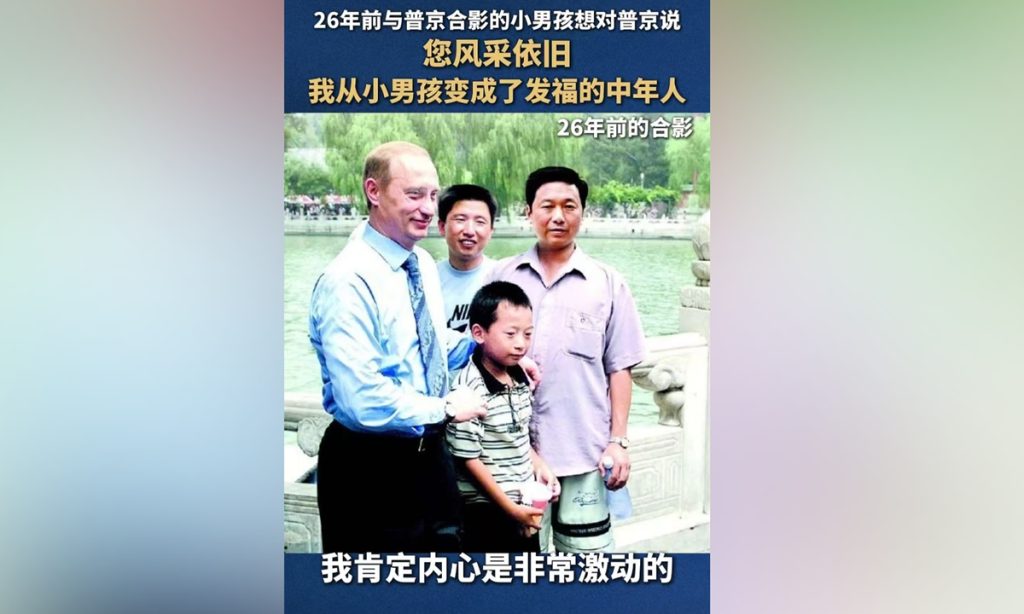
Peng's childhood photo with the Russian president has gained widespread media attention. According to a video posted by Russia Today both on Chinese and overseas social media platforms, Peng said he is deeply moved to meet President Putin again and he plans to tell him: "President Putin, you're still as dashing as ever, while I've gone from being a little boy to a middle-aged man who's put on a few pounds."

Peng, now 36, was among the fortunate children invited to visit Beihai Park in 2000. During that visit, he joyfully waved to Putin, who responded with warmth - lifting the boy from a stone railing, kissing his forehead, and posing for a memorable photograph, per TASS.

That moment profoundly influenced Peng's life. He learned Russian, graduated from the Moscow Automobile and Road Construction Institute, and even earned a Russian name among his friends - Pavel, or Pasha - symbolizing the enduring bond formed during that historic encounter, TASS reported.

According to another report by the TASS agency on Monday, Yury Ushakov, Putin's aide, shared details of the president's itinerary during a briefing. "Our president will meet with Chinese engineer Peng Pai at his residence," Ushakov announced. "Back in 2000, during his first state visit to China, President Putin saw Peng Pai as a young boy. Now, many years later, they will reconnect."

Ushakov emphasized the significance of this encounter, saying, "Peng Pai has since grown up, earned a university degree in Moscow, and now works for a major Chinese corporation. We see this as a meaningful symbolic meeting," TASS reported.

Peng said "To think that 26 years later, an incredible dream could come true. That chance encounter 26 years ago, one that should have been completely impossible never led me to expect that we would have the chance to meet again 26 years later. It really is unbelievable," according to a China News Service Wednesday report, citing the footage by the Russia Today.  

Also, according to TASS, Peng has expressed a heartfelt desire to serve as a bridge of friendship between Beijing and Moscow. "In my profession, I build roads, bridges, and tunnels. I would like to construct a friendship bridge between Russia and China," he told Russian journalists, according to TASS. 

Russian President, Pakistan Prime Minister reportedly soon to visit China; moves highlight China’s growing global influence: Chinese expert

Russian President Vladimir Putin and Pakistan Prime Minister Shehbaz Sharif are reportedly planning visits to China. As of press time, however, the Global Times has not seen any confirmation from the Chinese Foreign Ministry regarding the visits. Observers noted that a new wave of high-level visits to China is underway, and with China's rising strength and global influence, countries are increasingly seeking closer engagement, recognizing its development opportunities and major-power role.

Russian President Vladimir Putin's visit to China will take place in the very near future, and the date will be announced soon, Kremlin spokesman Dmitry Peskov said at a briefing, Russian media outlet TASS reported on Thursday.

"This visit is being prepared. It can be said that the preparation has already been completed — we are just adding the final touches. It will take place in the very near future," Peskov said in reply to a question about whether there is now clarity regarding the dates of Putin's visit to China.

Speaking at a previous press conference, Putin described cooperation between states like China and Russia as "undoubtedly a factor of deterrence and stability" in global affairs, said the Xinhua News Agency on May 10. He noted that China is Russia's largest trade and economic partner, adding that bilateral trade diversification continues through high-tech industries, which is very important.

Regarding the remarks by Putin, Chinese Foreign Ministry spokesperson Guo Jiakun also responded during a press conference on Monday by saying that China and Russia are comprehensive strategic partners of coordination for a new era.

This year marks the 30th anniversary of the China-Russia strategic partnership of coordination, the 25th anniversary of the signing of the China-Russia Treaty of Good-Neighborliness and Friendly Cooperation, and the first year of the China-Russia Years of Education, which provides fresh opportunities for further advancing the China-Russia relationship, Guo said.

Russian Foreign Minister Sergei Lavrov paid an official visit to China on April 14 and 15. During his meeting with Chinese Foreign Minister Wang Yi, Lavrov said Russia is willing to work with China to maintain close high-level exchanges, deepen practical cooperation and achieve mutual benefit and win-win results.

Zhang Hong, research fellow at the Institute of Russian, Eastern European and Central Asian Studies, Chinese Academy of Social Sciences, told the Global Times that Putin's earlier remarks, in his view, underscore how China-Russia ties inject stability into a turbulent international landscape.

In addition to Putin's announced upcoming visit, Pakistan Prime Minister Shehbaz Sharif is set to undertake a three-day visit to China, starting May 23, Pakistan Deputy Prime Minister and Foreign Minister Ishaq Dar said on Tuesday, Pakistani media Dawn reported.

According to Dawn, speaking at a ceremony, Ishaq Dar underscored that Pakistan and China were taking "another significant step towards innovation, digital connectivity and the economy of the future as our partnership enters a new phase in the digital age."

He remarked that the Pakistan-China friendship was "not ordinary diplomacy", per the report.

"It is a relationship tested by time and strengthened by trust […] from the Karakoram Highway, carved through some of the most difficult terrain in the world, to the China-Pakistan Economic Corridor, which transformed Pakistan's energy and connectivity landscape," he continued, Dawn reported.

Earlier, Pakistani President Asif Ali Zardari's visit to China, which ran from April 25 to May 1, included stops in Hunan and Hainan provinces, Xinhua News Agency reported.

"Frequent high-level visits underscore the uniqueness of China-Pakistan ties, Pakistan's diplomatic agility amid global turbulence, and China's facilitation of cooperation and strategic alignment, advancing a closer China-Pakistan community with a shared future," Zhu Yongbiao, director of the Center for Afghanistan Studies at Lanzhou University, told the Global Times on Thursday.

Commenting on the recent surge of high-level visits to China, two experts expressed similar views. Zhu noted that China's growing influence in global governance, development, and economic cooperation are prompting countries to seek closer engagement, reflecting recognition of China's development opportunities and major-power role.

In an era marked by uncertainties in the world, China has become a key stabilizer, offering peace, win-win cooperation, and constructive contributions amid international uncertainty—explaining why countries are increasingly drawn to engage with Beijing, both experts stressed.

New 'two-headed' snake species discovered in South China’s Guangxi

Recently, a new species of "two‑headed" snake has been discovered in South China's Guangxi Zhuang Autonomous Region, which raises its blunt, rounded tail tip to mimic a head when disturbed, the Xinhua News Agency reported.

This discovery has been published in the journal Zoosystematics and Evolution, marking another new species discovered within Guangxi Huaping National Nature Reserve, Xinhua reported.

While conducting field surveys in broad‑leaved forests at an elevation of about 760 meters within the Cathaya argyrophylla management zone of the reserve, a research team from the Natural History Museum of Guangxi unexpectedly discovered this small, non‑venomous fossorial snake species, according to Xinhua. 

Comprehensive assessments, including morphological observations and molecular biological analyses, confirmed it to be a previously undescribed new species, formally named the "Guangxi two‑headed snake," Xinhua reported.

The research team said the snake features a slender build, with adult individuals reaching merely around 22 centimeters in total length. Its dorsal side is brownish tan, marked with seven intermittent dark longitudinal stripes, while dark edging on its scales forms an intricate reticulated pattern, granting it highly distinctive physical characteristics, according to the report.

As a typical semi-fossorial snake, it is slow-moving, docile, non-venomous, and non-aggressive, Xinhua reported. It is primarily nocturnal, often hiding in leaf litter, humus soil, or rock crevices, and feeds mainly on earthworms and insect larvae.

Its most peculiar habit is that when disturbed, it coils its body into a figure-eight shape or raises its blunt, rounded tail tip to mimic its head, from which its common name "two-headed snake" derives, Xinhua reported.

The identification of the Guangxi two‑headed snake marks the second new species discovered within Huaping National Nature Reserve this year. This finding not only enriches China's inventory of amphibian and reptilian species but also provides pivotal evidence for phylogenetic research on two-headed snakes, Xinhua reported.

‘Vivid embodiment of all-weather strategic cooperative partnership’: Chinese MND on delivery of first Qilin-class conventional submarine to Pakistan

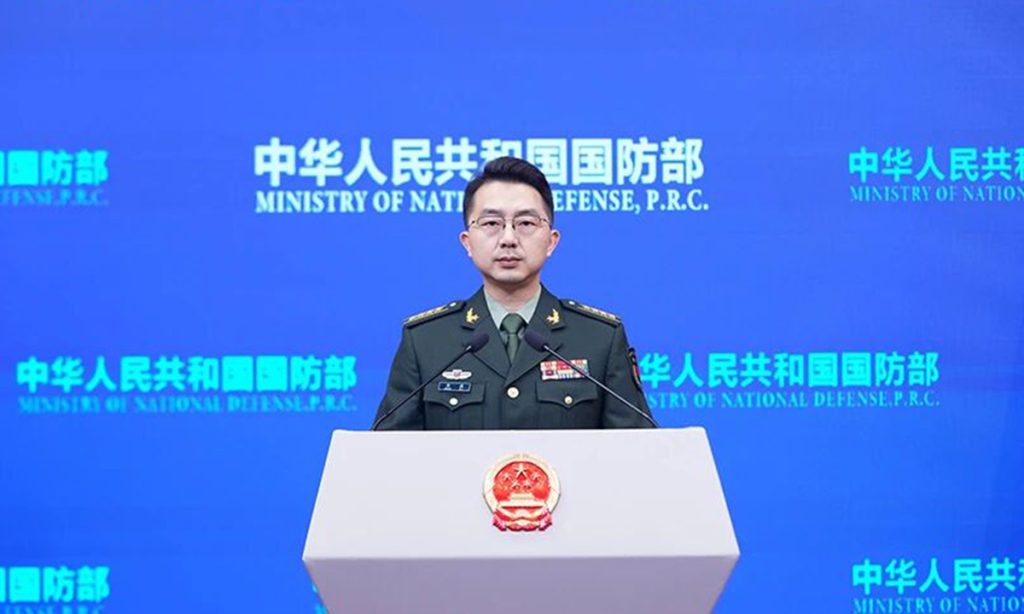
A spokesperson for the Chinese Ministry of National Defense (MND) said on Saturday that the delivery of the first Qilin-class conventional submarine to Pakistan, also known as Hangor-class submarine, PNS/M Hangor, represents normal military equipment cooperation between the two countries and serves as a vivid embodiment of their all-weather strategic cooperative partnership.

It is reported that the Pakistan Navy announced the commissioning ceremony of the vessel in Sanya, South China's Hainan Province, on April 30. Pakistani President Asif Ali Zardari and Chief of the Naval Staff Admiral Naveed Ashraf were present at the ceremony, according to Pakistan Navy press release. 

Asked to comment on this, Senior Colonel Jiang Bin, the MND spokesperson, said that under the strategic leadership of both countries' leaders in recent years, bilateral ties have continuously scaled new heights and delivered fresh outcomes. 

Over the years, the two militaries have supported each other with utmost sincerity. Fruitful cooperation in strategic dialogue, joint exercises and training, personnel development, and equipment and technology has made important contributions to the security of both countries and regional peace and stability, Jiang noted.

In the next stage, the two militaries will further strengthen strategic mutual trust and deepen practical cooperation in various fields, so as to build an even closer China-Pakistan community with a shared future and contribute to world peace and development, the MND spokesperson said.

China’s tech-heavy STAR 50 Index hits a new record high on AI-driven rally Wednesday

China's tech-heavy STAR 50 Index, tracking the 50 largest and most liquid stocks on the high-tech board, soared to a record high on Wednesday fueled by extraordinary financial performances of semiconductor, artificial intelligence (AI) and battery companies.

Market analysts said that they are optimistic about the outlook of China's stock market, betting on opportunities from the rapid technological development and robust economic resilience of the world's second largest economy.

On the first trading day after the 5-day May Day holidays, the STAR 50 Index surged 9 percent in intraday trading. Shares of chip developer Hygon Information Technology Co Ltd saw intraday gains of 20 percent, while integrated circuit design firm Montage Technology and chipmaker Biwin Storage Technology Co Ltd were both up 16 percent. The index closed 5.47 percent higher at 1,656.95 points.

As China accelerates the development of new quality productive forces, the strong financial results of those companies is mainly driven by rapid iteration in AI applications, rising demand for advanced semiconductor manufacturing equipment and computing power, and a continued recovery in new-energy materials, Yang Delong, chief economist at Shenzhen-based First Seafront Fund, told the Global Times on Wednesday.

Yang said that the recent bull runs for A-shares and H-shares will likely continue this year, with Chinese high-tech companies bringing more investment opportunities and attracting continuous inflows of foreign capital.

According to Shanghai-based financial data provider Wind Information, the qualified foreign institutional investors' (QFIIs) holdings are mainly focused on sectors including banks, electronics, and telecommunications.

The electronics sector saw the largest increase in the number of shares held by QFIIs in the last three months, led by telecommunications sector which recorded the highest growth in the market value of QFII holdings, up by 10 billion yuan ($1.46 billion), the Securities Daily reported.

Foreign financial institutions told the Global Times on Wednesday that China's economic and financial resilience has been evident this year. The country's full-year growth is projected to stay within the target range of 4.5-5 percent, underpinning the stock market. The institutions are upbeat on sectors including AI technology, energy, and raw materials.

China's GDP growth rate of 5 percent year-on-year in the first quarter exceeded market expectations, according to a note released by Goldman Sachs on April 24. It highlighted notable resilience in Chinese financial markets despite external uncertainties.

There are offsetting factors and policy tools that the Chinese government can use to keep economic growth within its target range for the remainder of 2026, for instance, China's advantages in new-energy products, resilient supply chains, and policy flexibility, according to the note.

Chinese stocks closed broadly higher on Wednesday, with the benchmark Shanghai Composite Index up 1.17 percent at 4,160.17 points. The Shenzhen Component Index closed 2.33 percent higher at 15,459.62 points. The ChiNext Index, tracking China's Nasdaq-style board of growth enterprises, gained 2.75 percent to close at 3,778.16 points.

Wang Zonghao, head of China equity strategy research at UBS, forecasted more appreciation in both the A-shares and H-shares over the coming two months, noting that the A-share market is expected to benefit from robust profit expansion in the industrial sector, according to a note sent to the Global Times.

The analyst pointed to investment opportunities in AI hardware, electricity equipment, and non-ferrous metals.

"As the Iran conflict has driven up global energy and commodity prices, corporate profit margins may be under pressure in the next few quarters. However, this is a global headwind, and Chinese enterprises will feel less impact compared with those from other regions," read the note, outlining reasons including China's ample strategic petroleum reserves and greater adoption of renewable energy and electric vehicles.