Foreign influencers in China expose true extent of US-led anti-China hatchet job

Foreign internet influencers who were tagged as "propagandists for Communist Party of China (CPC)" in a report by a US government-funded think tank strongly hit back at such "hysterical" accusations, calling the report "comical and disappointing" while noting such move aims at trying to silence the truth about China.

They have appealed for the US government to stop funding such kinds of narrative campaigns and "witch hunts" against China that extend to China-based foreign vloggers.

On November 24, 2023, the Australian Strategic Policy Institute (ASPI) released a lengthy report entitled "The role of foreign influencers in China's propaganda system." The report portrays them as a propaganda tool to promote or defend China's position, or to counter Western narratives, as part of the CPC's campaign to cultivate "a rising group of foreign influencers with millions of fans, which endorses pro-CCP narratives on Chinese and global social-media platforms."

Jerry Kowal, an American internet influencer and video blogger based in Shanghai with over 20 million followers on Chinese social media platforms, is one of the targets in the report.

Jerry updated with the Global Times that "there is pending litigation over the matter in multiple countries," after he publicly released a letter on December 6, 2023 that he has sent to the US Department of State, claiming that the US State Department may have used funding to unfairly attack US citizens in China via the far-right Australian think tank ASPI.

Andy Boreham, another popular Shanghai-based journalist tagged in the report, said it is quite hysterical to be portrayed as one of the "foreign propagandists" by ASPI, "which is actually the one producing fake and misleading propaganda at the behest of their foreign backers.

"Isn't it ironic?" he asked in an interview with the Global Times.

ASPI has long served as an anti-China vanguard. Its revenue data history shows that the US government is its major funding source. Analysts noted that this reflects the essence of such Western think tanks as tools for political manipulation, which spread false information, mislead the public, and poison public opinion.

This is not the first time that this particular "a thief crying 'stop thief'" tactic has been employed by the US government, which has been exposed more than once in its funding of negative news coverage of China to the tune of millions of dollars.

Under the disguise of the "free press" and "objective reporting," the US-led West is eyeing a chance to sponsor its media hit squads to reprise their roles as bounty hunters rather than journalists. This is part of the influence operation waged by some Western countries, the world's veteran players in swaying public opinion against China, analysts said.

The vloggers have called on the think tank staffers to experience the real China by coming themselves, to understand that it is absolutely possible for young "influencers" to have an amazing time in China and want to share it with the world.

Open letter to call off unfair accusations
In the report by ASPI, Jerry was mentioned over 12 times and was tagged as a propagandist who shows a "sympathetic perspective on Chinese policies and his criticisms of Western ones" especially during the COVID-19 pandemic. As the report states, he allegedly gained "unprecedented success in China's cyberspace" because of this.

In an opening letter, Jerry said he was disappointed to see that ASPI report mentions him as someone who "echo[s] propaganda talking points," which he said, "does not reflect who I am."

He added: "It's possible that ASPI's report might be impacting US domestic discourse. I wonder if consideration could be given to the precedent this sends when [the] US Department of State funds [the] ASPI, which then portrays US citizens, who have large followings on both Chinese and US social media, in a less than positive light."

Jerry is simply asking the US Department of State to cease further funding of the ASPI. "It's possible that a continued association with [the] ASPI might send very mixed signals about American values and might not be helpful for public diplomacy efforts."

A netizen's comment on X wrote: "It is amazing that a report like this can come out without even contacting the people they name. I am glad the letter was created - the whole thing stinks. People just want the truth and it is getting harder to get. Thank you for all you do."

While speaking to the Global Times, Jerry expressed his disappointment and indignation at how the entire matter was handled.

Not the sole stigmatized victims

"Not a speculator who touts China, but a media person who tells the truth." This is how Andy Boreham, New Zealand's columnist, journalist, and video creator, who works in Shanghai, defines himself on his X profile page.

This is precisely why Andy remains active and vocal on social media - to present China in an unbiased manner that should not be censored by Western media forces.

However, this has attracted attacks from the ASPI, who indiscriminately cast their shadow on anyone who speaks positively about China.

"I thought the report was just another example of a far-right wing, war-industry-funded piece of ill-informed, fear-mongering propaganda," Andy told the Global Times.

"According to ASPI, our lives here are absolutely hideous, repressed, and ugly, but we endure it all for money from the CPC. We cannot be telling the truth and must have been paid to trick the world into thinking China is anything but a dystopian, draconian, dangerous, dirty hellscape. It's laughable, and I don't expect anything more from them far-right wing warmongers," he said.

It is absolutely possible for young "influencers" to have an amazing time in China and want to share it with the world. That's what young people do these days. For ASPI to try and trick Australians into believing that anyone who says anything good about China has been paid by the CPC just goes to show how little they know about this place, and how invested they are in pulling the wool over the eyes of ordinary Australians so that their backers, including weapons manufacturers, the US State Department, and the Australian Defense Department, can make a pretty penny selling weapons to a scared population, Andy argued.

Jerry and Andy are not the sole victims of the West's spurious reports aimed at stigmatizing foreign influencers based in China who do not blindly align with the Western anti-China stance, but insist on reporting about a real and positive China.

Barrie VVeiss, a British media professional who moved to China in 2014, began to share what he sees and hears in China to the world while explaining the West to Chinese audiences on social media platforms shortly after his move. He created a website called Best China Info in order to break the information barriers between China and the West, and counter the anti-China stereotypes and prejudices in mainstream Western media.

He once was also a target of the ASPI. A BBC report in July 2021 listed him as one of the foreign vloggers presented as "China lovers" and cooperated with "state-owned outlets to spread China's rhetoric to the world."

"[These distorted reports] are not surprising," Barrie told the Global Times. According to Barrie, the BBC interviewed him via email before releasing that report, but did not include any of Barrie's answers or responses in the report. "Instead, they twisted the facts and further smeared me. I think they never intended to release my replies," Barrie said.

"More people need to see the real China by coming themselves, and if they can't for whatever reason, they need to hear about China from people who have been here and experienced it first-hand," Andy said. "That is what the ASPI and its far-right wing backers are trying to stop; they're trying to silence the truth about China. We shouldn't let them win."

A thief crying 'stop thief'

$500 million - that's the sum of money allocated by the US Congress to the disinformation campaign against China.

First reported by the American Prospect on February 9, 2022, a bill was passed by the US House of Representatives to allocate $500 million to media outlets for the purpose of producing journalistic content for overseas audiences that is critical of China.

Meant to "combat Chinese disinformation," the bill would direct funding to the US Agency for Global Media, a US-run foreign media service, as well as local outlets and programs to train foreign journalists.

Moreover, in September 2021, Danish scholar Jan Oberg exposed in an interview that the US has earmarked $1.5 billion to train Western media and journalists to write exclusively negative stories about China over the next five years.

In a previous interview with the Global Times, Oberg called such actions "mind-boggling" because they entirely undermine the West's own pride in free media, freedom of expression, and fairness in reporting different standpoints.

"The whole world would gain and grow tremendously if we chose cooperation and unity in diversity instead of permanent confrontation and dominance. But I seriously wonder whether the Occident can live without perceiving enemies constantly," he questioned.

The intention behind the actions of the US government and its institutions is clear - they want to use their perceived overwhelming public opinion and communication power to make the world accept the fabricated impression and narrative of China created by the US, Li Haidong, a professor at the China Foreign Affairs University, told the Global Times.

Meanwhile, the US strongly opposes and prevents objective, balanced, and rational narratives of China from being widely accepted both domestically and internationally, Li said.

In other words, the US government and some think tanks attempting to use discourse power and communication as weapons in their comprehensive geopolitical competition with China. This can be seen as an important component of the US cognitive warfare against China, Li pointed out.

"I truly don't think anyone except the ASPI - of course at the behest of their war-industry funders and the US government - would stoop so low as to try and convince ordinary people that online 'influencers' showing the world the amazing time they're having in China is propaganda," Andy said.

Maybe the ASPI crew should come to China and see for themselves that this place is vibrant, fun, exciting, action-packed, and educational. I'm sure they would learn a lot! Hence, I would even be willing to show them around myself, he laughed.

Leading experts hail China’s initiative on AI governance, call for global efforts in enhancing communication and ensuring safety

Editor's Note:

The year of 2023 has witnessed important moves taken globally to deal with the rapid development of Artificial Intelligence (AI) and its subsequent impact. On November 15, Chinese President Xi Jinping and US President Joe Biden agreed to establish China-US government talks on AI. Earlier this month, representatives and companies from 28 countries as well as the EU signed the Bletchley Declaration, a "world-first" agreement on AI to tackle the risks of frontier AI models, during the UK's AI Safety Summit. In October, China put forward the Global AI Governance Initiative at the Belt and Road Forum for International Cooperation. Also in October, the United Nations (UN) Secretary-General launched an Advisory Board to explore ways to link various AI governance initiatives.

These moves marked the beginning of the world's united efforts in managing AI development. It will, however, be a long time before the results of such efforts are seen. Why have major countries and international organizations decided on a proactive approach toward AI development at this time? How will the Global AI Governance Initiative lead China to contribute more to the governance and development of AI technology? In which direction will AI likely take the whole human society and how should we prepare ourselves for such a reality? The Global Times spoke with three leading Chinese experts in the field of AI, who provided deeper insights into a human-AI integrated world.

Zeng Yi, Professor at the Chinese Academy of Sciences, Director of the Center for Long-term AI and a member of the UN High-level Advisory Body on AI:

In recent years, the application of AI has rapidly entered various sectors of society, especially in 2023, when the development of generative AI technology has reached unprecedented heights in terms of user experience and application scope. Promoting social and economic development aside, it has also brought various risks, such as a direct threat to social trust due to misinformation generated by AI; the challenges that AI may pose to social fairness and employment; and the potential safety risks and the negative impact on society following misuse, abuse, and malicious use of technology.

AI risks and safety issues are global challenges that no country can handle alone. UN Secretary-General António Guterres called for the global governance of AI risks at the UN Security Council meeting on AI in July. In a follow-up step, the UN established a dedicated high-level advisory body, of which I am one of the two Chinese members, to address the global development and governance of AI.

China has proposed the Global AI Governance Initiative. The initiative is not only a positive response to global challenges, but also substantially supports the UN in coordinating the global governance of AI.

The initiative proposes that the development of AI should adhere to the principle of a people-centered approach, with the goal of increasing the wellbeing of humanity. AI draws inspiration from natural intelligence, especially human intelligence, and strives to develop technologies with learning, reasoning, decision-making, and planning capabilities to handle and solve complex problems. It is expected to assist humans and become an empowering technology that promotes social and ecological development. Therefore, the development of AI should aim to enhance common wellbeing while adhering to human values and ethics, and promote the progress of human civilization.

At the same time, the initiative also stresses that we should adhere to the principle of mutual respect, equality, and mutual benefit in AI development. This principle first reflects China's commitment to global sustainable development and the construction of a global community of shared future in order to share development opportunities, platforms, and benefits with the world. Countries with advantages in technological development should all share the fruits and experiences of development from a global perspective while enjoying the opportunities brought about by technological development.

AI has tremendous potential value. Currently, generative AI processes and predicts information much faster than humans can. We should harness its benefits, but also pay close attention to the challenges it brings. AI has never been neutral, and without an ethical safety framework, it lacks boundaries. It is crucial to construct a robust risk, safety and security detection framework.

China has always had a global perspective and international sentiment in the governance of AI, and has been committed to actively contributing its practical experience to global governance in this field. However, successful and effective governance of AI requires joint efforts from the international community at the global scale, sharing ideas, opportunities, experiences, ensuring safety and security by collective efforts.
Liu Wei, Director of the human-machine interaction and cognitive engineering laboratory with the Beijing University of Posts and Telecommunications:

The main reason why the international community started to pay a lot of attention to the security issues of AI is because AI technology is advancing at an unexpected speed. With the emergence of ChatGPT, people feel that the automation level of AI products is increasing, posing the potential risk of loss of control. People worry that AI may lead to unexpected outcomes, especially when the technology is combined with certain critical security departments. For example, in the military field, if AI is combined with nuclear weapons, there is a high possibility of things getting out of control.

AI technology itself can also generate various complex risks, including economic, social, financial, cultural, and military, leading to a chain reaction in these fields. Many parts of the world are vigorously developing smart cities, smart homes, smart transportation, and smart buildings. However, if there are AI weapons, these smart technologies can become very dangerous.

As one of the pioneers in the field of AI, China has been injecting Eastern wisdom into the global governance system through practical actions, showcasing its vision and responsibility as a major country. The Chinese approach and Eastern wisdom are crucial for the management of future AI development.

The concept of "developing AI for good" may be problematic in the Western context. Technology is an objective existence in the material world, while "goodness" is an inevitable requirement of ethics and morality. Whether an inevitable requirement can be derived from an objective existence is a topic that is still up for debate in the West.

AI is the crystallization of human wisdom. Despite being labeled as "intelligent," it is, at most, an advanced tool created by humans. The development direction and utility of AI technologies are fundamentally determined by human perspectives, horizons, understanding, and means. The essence of "technology for good" is the goodness of "humans." Therefore, in terms of regulation, it is necessary to adhere to the concept of ethics first, establish and improve an ethical accountability mechanism for AI, and clarify the responsibilities and rights boundaries of AI entities.

In terms of research and development, it is necessary to ensure that advanced technological methods are always under responsible and reliable human control, prevent the generation of data algorithm biases, and make the research and development process controllable and trustworthy. In terms of usage, it is necessary to ensure personal privacy and data security, establish emergency mechanisms and fallback measures in advance, and provide necessary training for users.

The future direction of intelligent development should be "the coordinated development of the human-machine-environment system while operating at high speed." Here, "human" involves managers, designers, manufacturers, marketers, consumers, and maintainers among others; "machine" not only refers to the software and hardware in intelligence equipment, but also involves the mechanisms connecting various links in the industrial chain; "environment" involves the collaborative environment of "government, industry, academia, research, and business" in many fields. This judgment takes into account both the rationality and science of the West and the natural principles and ethics of the East, as well as the complementarity of humans and machines.

It is unlikely that AI will surpass human intelligence based on the existing mathematical system and design patterns of software and hardware. However, it might be possible in a human-machine-environment system in the future. The future of human-machine fusion intelligence lies in symbiosis, combining human wisdom with machine intelligence. The essence of human-machine interaction is coexistence, combining human physiology with machine physics.
Brian Tse, Founder and CEO of Concordia AI, a Beijing-based social enterprise focused on AI safety and governance and a policy affiliate at the Centre for the Governance of AI founded at the University of Oxford:

The world is entering a golden era of opportunity for international cooperation and the governance of AI.

China is indispensable in global discussions on addressing AI's risks and opportunities. In our recent 150-plus page report "State of AI Safety in China," Concordia AI analyzes the landscape of Chinese domestic governance, international governance, technical research, expert views, lab self-governance, and public opinion in addressing frontier AI risks. Based on the report, we believe China can make many invaluable contributions to global AI governance.

On domestic governance, China has moved faster than any other major jurisdiction in regulating recommendation algorithms, deepfakes, and generative AI. As countries seek to develop their own domestic governance frameworks to mitigate AI's worst risks, there is a golden window of opportunity for policymakers to exchange lessons and it would be immensely beneficial for China to share its regulatory insights with the rest of the world.

On the international stage, China can help empower the voices of countries in the Global South. Proliferation of frontier models has major dangers, but these cannot be addressed without engaging the Global South. Moreover, global inequality will be exacerbated if the Global South lacks AI solutions to pressing social and environmental challenges. As the first steps toward promoting greater equality, Chinese labs have been actively working to incorporate underrepresented languages in large language models. For example, China's National Peng Cheng Laboratory has constructed a diverse corpus dataset and data quality assessment toolkit, covering Chinese, English, and over 50 languages from countries and regions that are part of the Belt and Road Initiative (BRI).

In technical AI safety, China has cutting-edge research and top talent to offer. China's robustness research has already garnered global recognition. Over the last year, Chinese research groups have also started exploring increasingly sophisticated frontier AI safety issues such as safety evaluations, red-teaming (a tool used in cybersecurity to test how an organization would respond to a genuine cyberattack), and scalable oversight.

As China and the US have agreed to establish China-US government talks on AI, we also suggest the two countries explore cooperation in the following areas:

First, China and the US should establish regular channels of communication involving policymakers, leading developers, and experts on AI safety. Currently, frontier AI capabilities are highly concentrated in a few large model research institutions and companies in China and the US. Therefore, China-US dialogue should consider involving the leading developers, gradually establishing mechanisms that serve common interests such as sharing information about emergent risks and safety incidents.

Second, China and the US should jointly strengthen research investment and cooperation in the field of AI safety. Recently, more than 20 top scientists in AI development and governance from countries including China, the US, the UK, Canada, and others from Europe co-authored a position paper and convened in-person to propose, among other things, that governments and companies allocate at least one third of AI R&D funding to ensure the safety and ethical use of AI systems.

Third, China and the US should agree on "bottom lines" for the development of frontier AI. For example, China and the US could jointly commit to banning AI from launching nuclear weapons, requiring human decision-making pre-launch.

Fourth, China and the US can learn from each other's AI governance and regulatory programs. Each country and AI lab is feverishly experimenting internally, trying to perfect a cocktail of AI governance policies for their unique situation. However, there are more similarities than many think; for instance, Senators Blumenthal and Hawley's Bipartisan Framework for US AI legislation proposes a national oversight body, licensing requirements, and safety incident reporting requirements to govern AI systems, similar to provisions in an expert draft for China's national AI law.

Fifth, China and the US should jointly explore and promote international frameworks and standardization norms. For example, China's National Information Security Standardization Technical Committee (TC260) has released a standards implementation guide on watermarking generative AI and additional plans for drafting future generative AI standards. China's TC260, US National Institute of Standards and Technology, and international bodies such as the Institute of Electrical and Electronics Engineers can help formulate international standards to prevent the creation and distribution of deceptive AI-generated content.

Yet dialogues and actions between China and the US are only a part of the picture. As we enter into an era of rapid progress in AI development, it is imperative that countries around the world transcend their immediate differences to prevent catastrophic risks and harness AI for the betterment of humanity.

Chinese mainland to enhance policy support for Taiwan businesses in developing new quality productive forces

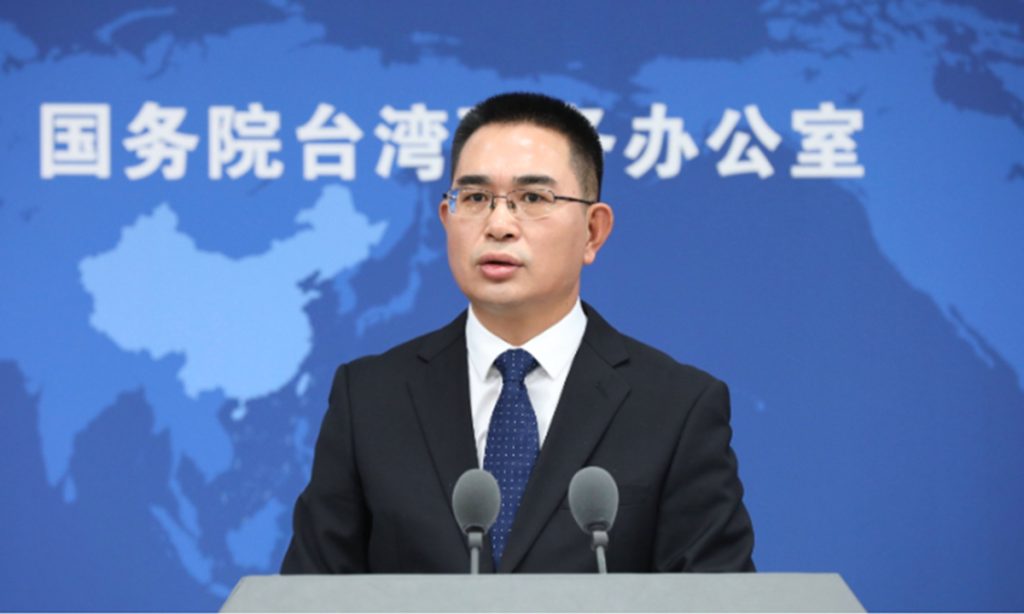
The Chinese mainland will enhance its policy support system to provide greater and more targeted support to businesspeople and enterprises from the island of Taiwan in developing the new quality productive forces, Chen Binhua, spokesperson of the State Council Taiwan Affairs Office, said at a press briefing on Wednesday.

Developing new quality productive forces is an inherent requirement and a key focus for promoting high-quality development. Taiwan businesses are bound to be participants, contributors and beneficiaries in this process, Chen said.

The mainland will maintain consistency and continuity in policy implementation, building a policy support system with greater strength and more targeted measures, Chen said, noting that this includes strengthening the leading role of technological innovation, optimizing factor allocation, and assisting Taiwan businesses in aligning with the direction of a modern industrial system's construction.

During the just-concluded two sessions, the development of new quality productive forces was included in the Government Work Report for the first time. It called for fully leveraging the leading role of innovation, and deeply cultivating and strengthening emerging industries.

By proactively planning for future industries and driving industrial innovation through technological innovation, it will create more opportunities to strengthen industrial cooperation across the Taiwan Straits, Chen noted.

The industries on both sides of the Taiwan Straits complement each other's strengths, Chen said, adding that Taiwan enterprises have technical advantages in advanced manufacturing, new materials and biomedicine. They have a solid foundation in big data and artificial intelligence, as well as extensive experience in modern agriculture and modern services.

Taiwan businesses should seize the opportunities in developing new quality productive forces, actively plan for future industries, participate in the innovative development of the digital economy, benefit from the mainland's rural revitalization policies, and actively contribute to the integrated development across the Taiwan Straits, Chen said.

"Promoting the integrated development across the Taiwan Straits is a long-standing and consistent policy of the mainland," Wang Jianmin, a senior cross-Straits expert at Minnan Normal University in Fujian, told the Global Times on Wednesday.

The mainland's economic development holds numerous business opportunities for Taiwan businesses. Despite certain interference from within the island and by external forces, the overall trend of cross-Straits integrated development will not change, Wang said, adding that Taiwan businesses are highly sensitive to opportunities and are expected to proactively seize the chances.

Additionally, the mainland, especially its coastal provinces, has provided significant policy support for Taiwan residents seeking to study and work in the mainland. There is a clear trend of more youth from the island coming to the mainland for employment and entrepreneurship, Wang said.

According to statistics from the Ministry of Commerce, from January to November 2023, the mainland approved 6,936 new Taiwan-funded projects, up 26.8 percent year-on-year, with actual use of capital from the Taiwan island amounting to $2.69 billion, an increase of 39.9 percent year-on-year.

The mainland economy remains promising despite external uncertainties, with a continued focus on consolidating the long-term positive trend. It will provide broader opportunities for Taiwan compatriots and enterprises to deepen their roots and participate in high-quality development on the mainland, Chen said.

Shanghai Disney Resort to build a new-theme attraction, as foreign firms eye more market opportunities in China

Shanghai Disney Resort is to construct a new themed attraction, a reflection that foreign investors remain upbeat in operating in China.

The new themed attraction is to be located adjacent to the newly opened Zootopia, which is at the initial planning stage.

Resort shareholders and management continue to signal optimism about Shanghai Disneyland and look forward to providing more updates as constructions progresses, the Global Times learned from the resort on Monday.

The latest expansion plan demonstrates Shanghai Disney Resort’s commitment to providing new offerings and developing the resort into a multi-day tourism destination for tourists from near and far, said the resort.

Since the resort’s opening in June 2016, Shanghai Disneyland theme park has undergone two expansions, with the opening of Disney•Pixar Toy Story Land in April 2018, and the opening of a second new themed land, Zootopia, in December 2023.

Foreign investors are now accelerating expansion in the Chinese market. Apple is set to open a new store in Shanghai’s Jing’an district on March 21, marking its eighth retail outlet in the city, according to the company’s website.

US fashion brand Supreme plans to open its first store in China, which will be its 17th store worldwide, jiemian.com reported.

Renewed confidence in the Chinese market comes as the Chinese government is stepping up efforts to attract overseas investment.

The Government Work Report, submitted to the national legislature for deliberation on March 5, outlined efforts to attract foreign investment. For example, all market access restrictions on foreign investment in manufacturing will be abolished, and market access restrictions in services sectors, like telecommunication and healthcare, will be reduced. Work will also be done to make China a favored destination for foreign investment, according to the report.

“As various economic incentives continue to be rolled out and implemented, we feel that Chinese economy is gaining momentum. In particular, in the context of China's high-quality development and the dual-carbon goals, we see rapid development of companies and markets that are in line with the megatrends, such as new energy, artificial intelligence and green building materials,” Alvin Hu, President of WACKER China, told the Global Times.

Data showed that China remains a major destination for foreign investment. A total of 53,766 new foreign-invested enterprises were established in 2023, marking a substantial 39.7 percent increase over a year earlier.

The structure of foreign investment also showed promising signs of improvement, with high-tech industries attracting 423.34 billion yuan in 2023, accounting for 37.3 percent of the actual use of foreign investment, a 1.2 percentage point increase from 2022.

Prominent economist Justin Lin debunks 'peak China' claims, highlights China's potential to surpass US

A prominent Chinese economist and a national political advisor has debunked various negative claims about the Chinese economy, including suggestions about "peak China" and "Japanification," while highlighting China's unique advantages and its potential to surpass the US to become the world's biggest economy.

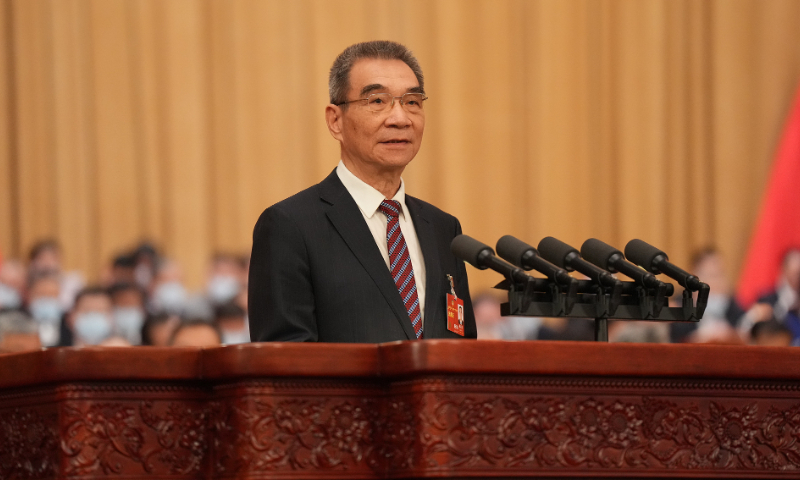
Justin Lin Yifu, dean of the Institute of New Structural Economics at Peking University and a member of the Standing Committee of the Chinese People's Political Consultative Conference (CPPCC) National Committee, the top political advisory body, said that under the current international and domestic economic conditions, China can reach a GDP growth rate of above 5 percent and a potential growth rate of 8 percent.

In a group interview on the sidelines of the ongoing two sessions with reporters from several media outlets, including the Global Times, Lin, the former senior vice president and chief economist of the World Bank, offered firm and sound rebuttals to a series of recent negative claims about the Chinese economy from Western officials and media reports.

The interview came after China's Government Work Report set a GDP growth target of around 5 percent for 2024, underscoring Chinese policymakers' firm confidence in the country's economic recovery, despite the risks and challenges. Such a growth rate means the Chinese economy will remain the fastest-growing among major economies and the main contributor to global growth this year.

"Considering the international and domestic economic conditions, with a potential annual growth rate of 8 percent, it is entirely possible for China to achieve an economic growth rate of above 5 percent," Lin said, pointing to China's various strengths, including a high savings rate, abundant investment resources and resolve to develop its economy.

On China's growth prospects, Lin also pointed out that China, as a major developing economy, is still at the stage of industrial upgrading and still faces a big gap with developed countries, but this creates "a late-comer's advantage." During this catch-up stage, other economies such as Japan, South Korea and Germany achieved a growth rate of 8 percent or above, according to Lin. "If they can achieve that, China also has the potential to achieve it," he said.
While many around the world have highlighted China's vast potential, some Western officials and media outlets have been smearing the Chinese economy recently, with a variety of claims such as "peak China," asserting that the Chinese economy is on a downward trend toward "Japanification," and that it will not catch up with the US.

Lin said that such claims are based on the fact that China's economic growth rate has slowed down and on Japan's experience in the 1980s and 1990s, when its economy lost steam. However, there are key differences between China and Japan back then, Lin said, noting that Japan's technological innovation, industrial upgrading, and productivity improvement during that period had stagnated. China, however, is at the same starting line as developed countries in terms of the new economy. It also has a large pool of talent, a massive market and a complete industrial landscape, Lin noted.

"What happened in Japan will not happen in China. I believe that as long as we continue our technological innovation and industrial upgrading, and improve productivity levels, per capita GDP will grow faster than that of the US," Lin said during the interview.

Another assertion made by Western officials and media outlets is that China will fall into a "middle income trap." But Lin said that China's per capita GDP is already over $12,500, which is very close to the threshold of $13,000 for becoming a high-income nation. "As long as we make good use of the favorable conditions for technological innovation and industrial upgrading, I believe we can become a high-income country - if not in 2025, then 2026," he said.

The economist further noted that with a growth rate of between 5 percent and 6 percent and a potential annual growth rate of 8 percent through 2035, and 3 percent and 4 percent from 2036 to 2050 with a potential growth rate of 6 percent, China's per capita GDP will hit half that of the US by 2049, and considering China's population is four times that of the US, China's economic size will then be twice that of the US, according to Lin. "China will become the world's largest economy and contribute the most to the world economic growth every year," he said.

China's declining population has also become a focal point in the Western media's smearing of the Chinese economy, with some reports even calling it "China's demographic catastrophe."

In the group interview, Lin dismissed such claims, saying that China used to rely on the size of the population, but it now focuses on the quality of the population, having stepped up investment in education.

"China is also facing the challenge of aging. For economic growth, the labor force is important, but more important is effective labor," Lin said. "I believe that under the guidance of the new development philosophy, China will put innovation first, its productivity level will continue to improve, and it will not grow old before it gets rich."

China to pursue high-quality opening-up, shorten ‘negative list’ for foreign investment: Premier Li Qiang

China will ramp up efforts to attract foreign investment, including further shortening the “negative list” for foreign investment, and all market access restrictions on foreign investment in manufacturing will be abolished, according to a government work report delivered by Chinese Premier Li Qiang to the annual session of the National People’s Congress (NPC) on Tuesday.

Highlighting the pursuit of higher-standard opening up and promoting mutual benefits, Li said that the country will promote alignment with high-standard international economic and trade rules, steadily expand institutional opening-up, and facilitate interplay between domestic and international markets.

“We will ensure the overall stable performance of foreign trade and foreign investment and foster new strengthens in international economic cooperation and competition,” Li said.

According to the report, market access restrictions in services sectors, such as telecommunications and healthcare, will be reduced. In addition, the country will expand the Catalog of Encouraged Industries for Foreign Investment and encourage foreign-funded enterprises in China to reinvest in China.

“We will ensure national treatment for foreign-funded enterprises and see that they can participate in government procurement, bidding, and standard-setting processes in accordance with the law and on an equal footing,” Li said.

China will also strengthen services for foreign investors and make China a favored destination for foreign investment and the country will make it easier for foreign nationals to work, study, and travel in China, Li said.

“These efforts confirm Chinese government’s commitment to further expanding opening-up, sharing development dividends with the rest of the world,” Li Yong, a senior research fellow from the China Association of International Trade, told the Global Times on Tuesday.

Continuously shortening the negative list for foreign investment represents the country’s increasing opening-up to foreign capital, while abolishing all market access restrictions on foreign investment in manufacturing showed that China, as a global manufacturing center, is not a closed system but welcomes capital from other countries to invest in the country, which will help upgrade global manufacturing for the benefit of the mankind, Li Yong explained.

The government work report set a growth target of around 5 percent for the Chinese economy in 2024, which is higher than assessments by international organizations.

Li Yong noted that the around 5 percent growth rate will shore up the confidence of foreign investors in China. “Foreign investors coming to China will not only contribute to China's economic growth, but also to their own growth, as the size of China's huge market will be unmatched by any other country.”

Moreover, the country’s continuous efforts to facilitate foreign investment will shore up investor confidence and assist the predictable and sustainable development environment for foreign investors operating in China, Li Yong said.

Over the years, the negative list for foreign investment has been continuously reduced. The first negative list for foreign investment in 2013 contained 190 articles, while the current version has been shortened to 31 articles and the version of Chinese free trade zones to 27 articles, Huang Shouhong, head of the State Council Research Office and the drafting group for the government work report, said on Tuesday.

Referring to last year's foreign investment, Huang noted that in 2023, China experienced a decline in the amount of actual use of foreign investment. As with any event, short-term fluctuations are normal and caused by a variety of factors.

“According to United Nations Conference on Trade and Development, if we exclude the factor of faster growth of investment transit areas, global foreign direct investment fell by 18 percent last year. At the same time, all countries are increasing their efforts to attract investment, so the competition for investment is becoming more intense,” Huang said.

China’s growth rate in attracting foreign investment fell by 8 percent in yuan terms last year, but it still ranked second internationally and first among developing countries, Huang said.

“At present, we face some disturbing factors in attracting foreign investment, but investors are rational and look for medium- and long-term returns. Foreign investors who have invested in China have seen a return on their direct investment of about 9 percent in recent years, which is at a relatively high level internationally. China remains a major destination for foreign investment globally, Huang noted.

“Recently, I have seen some foreign chambers of commerce reports which show that the vast majority of enterprises investing in China will not reduce their investment, and a high percentage of them will continue to make China their first choice or among the top three investment destinations in the world,” Huang said.

Yin Zheng, Executive Vice President of China & East Asia Operations, Schneider Electric, said in a note sent to the Global Times on Tuesday that China is promoting high-quality development and focusing on building new quality productive forces, creating greater development potential for China.

“Operating in China for 37 years now, Schneider Electric keeps investing in China with an optimistic perspective to China’s development. China is already the company’s second largest market in the world, one of the most important supply chain bases, and one of our four largest R&D bases. China has become an important source of innovation and development force for Schneider Electric,” Yin noted.

Chinese Embassy deplores Romania's rejection of Huawei's 5G equipment authorization

Chinese Embassy in Romania expressed deep regret and serious concern on Saturday about the decision by Romanian government to reject Huawei's submission for authorization of 5G telecom equipment, calling such a move undermine fair competition and the rule of law and will harm the interests of the Romanian people and China-Romanian economic and trade cooperation.

The remarks were made after the Romanian government issued on February 29 an official announcement in the government gazette, rejecting Huawei's submission for authorization of its 5G gear. The Romanian government claimed that this decision was taken "based on law 163/2021 regarding the adoption of measures related to information and communication infrastructures of national interest and the conditions for the implementation of 5G networks," which entered into force in June, 2021, according to media reports.

Since the enactment of the law, the Chinese Embassy in Romania has repeatedly conveyed its position to relevant parties such as the Romanian government, political parties, and the parliament, expressing serious concerns. "We firmly oppose the exclusion of any country or enterprise based on non-technical standards or discriminatory clauses and firmly oppose actions that undermine the principles of fair competition and the rule of law," the Chinese Embassy said in a statement on Saturday.

Huawei has been investing and operating in Romania for 20 years, strictly adhering to Romanian laws and regulations, and maintaining a good track record in network security.

Moreover, the company has actively participated in the construction of Romania's communication networks, committed to promoting information and communication technology cooperation between China and Romania, creating thousands of job opportunities, and making positive contributions to Romania's fiscal revenue, digital economic development, and information infrastructure construction, the Chinese Embassy said.

It is believed that if Romania provides a favorable market environment, Huawei can make a greater contribution to the development of information and communication technology in Romania, and Chinese investment in Romania will also expand further, benefiting Romanian people, said the embassy.

Conversely, failure to provide such an environment would result in substantial harm to the interests of the Romanian people and the economic and trade cooperation between the two nations, the embassy said.

Speaking on the 75th anniversary of diplomatic relations between China and Romania this year, the embassy said that the traditional friendship between the two countries and the achievements in economic and trade cooperation have been hard won. 

Cooperation between both sides, based on mutual respect and mutual benefit, is in line with the common interests of both countries. "We hope that Romania will consider long-term interests, adhere to the principles of fairness, justice, and non-discrimination, and create a favorable environment for Chinese businesses to invest and operate in Romania. It is essential to uphold practical cooperation between both sides with concrete actions," the embassy said.

The Chinese government will continue to firmly defend the legitimate rights and interests of Chinese enterprises, the embassy noted.

New higher-speed Beijing-Shanghai bullet train not ready yet for commercial service: expert

A discussion about the travel time between Beijing and Shanghai being shortened to two and a half hours thanks to a new high-speed bullet train went viral on Chinese social media recently. Experts said the train is technically feasible, but the economic and safety aspects need further consideration before it is put into commercial service.

A high-speed CR450 electric multiple unit (EMU) train with an experimental speed of 450 kilometers per hour will reportedly be deployed on the Beijing-Shanghai high-speed railway (HSR) in 2025 and may cut the travel time between the two cities to two and a half hours from over four hours, according to the South China Morning Post.

The news soon topped the trending list on Sina Weibo.

Some netizens said they are looking forward to the new bullet train, while some raised questions about the travel time.

The operation cost of HSR, including energy cost, abrasion of railway as well as the ticket price, will be increased if the speed of the bullet train is raised to 450 kilometers per hour, Zhao Jian, a professor from Beijing Jiaotong University, told the Global Times on Monday, emphasizing that the most critical issue is safety.

According to a report by the Science and Technology Daily, China State Railway Group Co (China Railway) announced in January 2021 that it would initiate a scientific research campaign for the CR450 EMU train, in order to foster a Fuxing bullet train product with high safety levels, environmental friendliness and intelligent functions adapted to the 5G era.

In June 2023, China Railway conducted a trial operation of a CR450 EMU train on the Fuqing to Quanzhou section of the Fuzhou-Xiamen HSR in East China's Fujian Province. The CR450 EMU train completed bridge and tunnel speed tests at 453 kilometers per hour and 420 kilometers per hour, respectively.

"The CR450 EMU train has been technically proven via multiple tests but it is necessary to further ensure the safety and reduce the operation cost before it enters commercial service, in order to match the transport demand along the route," said Zhao.

Chinese-developed ARJ21, C919 start demonstration flights in SE Asian countries

The Chinese-developed ARJ21 and C919 aircraft, which made their debuts at the Singapore Airshow, have started their demonstration flights in five countries, Vietnam, Laos, Cambodia, Malaysia and Indonesia, the Commercial Aircraft Corp of China (COMAC) said on Tuesday.

Experts said the demonstration flights have a significant meaning for Chinese passenger aircraft going abroad, as the flights can get international customers and the public to take a closer look at Chinese commercial aircraft.

The demonstration flights, which will be carried out over two weeks, aim to verify the planes' adaptability for airports, suitability of ground service equipment, applicability of special flight procedures and economy of route payloads, laying a foundation to explore Southeast Asian markets, COMAC said.

The first demonstration flight of the ARJ21 started at the Van Don International Airport in Vietnam on Tuesday afternoon.

Made-in-China products would be thought of as low-end industrial products in the past, and it's not easy to establish a better brand image. But such demonstration flights will improve the world's impression of Chinese aircraft and help establish the brand image of the entire Chinese industry, including aviation, Wang Ya'nan, chief editor of Beijing-based Aerospace Knowledge magazine, told the Global Times on Tuesday.

The C919 is the first trunk-line jet aircraft developed by China in accordance with international airworthiness standards, and it has independent intellectual property rights.

China's civil aviation regulator said at its annual meeting in January that it aims to promote the operation of the domestically manufactured C919 in more countries, as part of new moves to further lift air travel.

COMAC said it has established a Southeast Asian representative office and a regional warehouse for aviation materials in Guangzhou, South China's Guangdong Province. The company is planning to establish nearby training bases based on customers' own maintenance, repair and operations.

As for why Southeast Asian countries were chosen for demonstration flights, Wang said that the Southeast Asian market is more compatible with the ARJ21 and C919 aircraft than other regions due to the distribution of archipelago and peninsula regions, which are more suited for the two jets.

Qi Qi, an independent market watcher, said that demonstration flights will help win more customers. The ARJ21 is now in service in Southeast Asian countries.

The ARJ21, which can carry 78-97 passengers with a range of 2,225-3,700 kilometers, performs well during take-off and landing in high-temperature and high-altitude settings.

So far, a total of 127 of this aircraft have been delivered since it entered commercial operation in June of 2016, transporting more than 11 million passengers, COMAC said. Two ARJ21 aircraft operated by Indonesia's Transnusa Airlines have been running on four routes from Jakarta to five cities, carrying more than 100,000 passengers.
The C919 completed its first commercial flight on May 28, 2023. COMAC has delivered four aircraft to its China Eastern Airlines. The planes are in service on the Shanghai-Beijing and Shanghai-Chengdu routes, and they have carried more than 130,000 passengers.

At the just-closed Singapore Airshow, China's Tibet Airlines and COMAC signed a deal for 50 aircraft suitable for high-altitude plateaus (40 C919 and 10 ARJ21 planes), making Tibet Airlines the launch customer.

Wang said that the operational capacity and efficiency of the aircraft are more important than the number of orders delivered.

Ensuring production capacity and operational efficiency are more important than anything else for COMAC at present, for these aspects will be the most powerful evidence to promote Chinese aircraft in the international market, Wang said.

COMAC has forecast that the global passenger aircraft fleet will increase from 24,264 now to 51,701 in 20 years. The Asia-Pacific fleet will increase from 3,314 to 9,701.

Autonomous driving companies in China allowed to run more manned demonstration activities on city mortorways

Several autonomous driving companies in China has been permitted to carry out more manned demonstration activities on city motorways, latest development of Chinese autonomous driving firms supported by government policies. 

Chinese autonomous driving company Pony.ai said recently that the roads between the Beijing Daxing International Airport and Beijing Economic and Technological Development Zone, with a length of more than 40 kilometer of highways, could allow L4 driving, which means a vehicle could operate itself without the active intervention of a human driver.

The route contains urban roads and highway scenarios, including about 40 kilometers of expressways.

Pony.ai has launched the airport pick-up and drop-off function on the taxi-hailing app. 

Market watchers said that urban travel at airports and high-speed rail stations are an important part of the commercialization of autonomous driving, which means more mature iterations of technical capabilities, as well as exploration of revenue models. 

Earlier in November of 2023, a circular released by four ministries, including the Ministry of Industry and Information Technology and the Ministry of Transport, said that China will pilot market access for intelligent connected vehicles (ICVs) and allow them to run on public roads.

Cities will choose some ICV models equipped with automated driving functions, capable of being mass-produced, to grant them market access and test the selected vehicles on designated city roads.

In a work report delivered by Beijing municipal government in 2024, the capital city said it will launch the construction of a high-level autonomous driving demonstration zone and promote the orderly opening of key application scenarios such as airports, train stations, and urban road cleaning.

In addition, more Chinese local governments have launched plans on smart driving. Sichuan Province vows to cultivate new energy and intelligent connected vehicles as a strategic emerging industry in 2024. 

On Thursday, Haomo.AI, an autonomous driving technology start-up backed by Great Wall Motor said that it received more than 100 million yuan in financing, and the funds raised will mainly be used for the research and development of AI autonomous driving technologies such as Haimou large models.

As of February 2024, HPilot, Haimou's passenger car intelligent driving product, is equipped with more than 20 vehicles, and the user-assisted driving mileage has exceeded 120 million kilometers.

Gu Weihao, CEO of Haomo.AI said that the company will continue to increase investment in technology research and development of large models, large computing power, and big data, and also explore the application of autonomous driving in multiple scenarios.