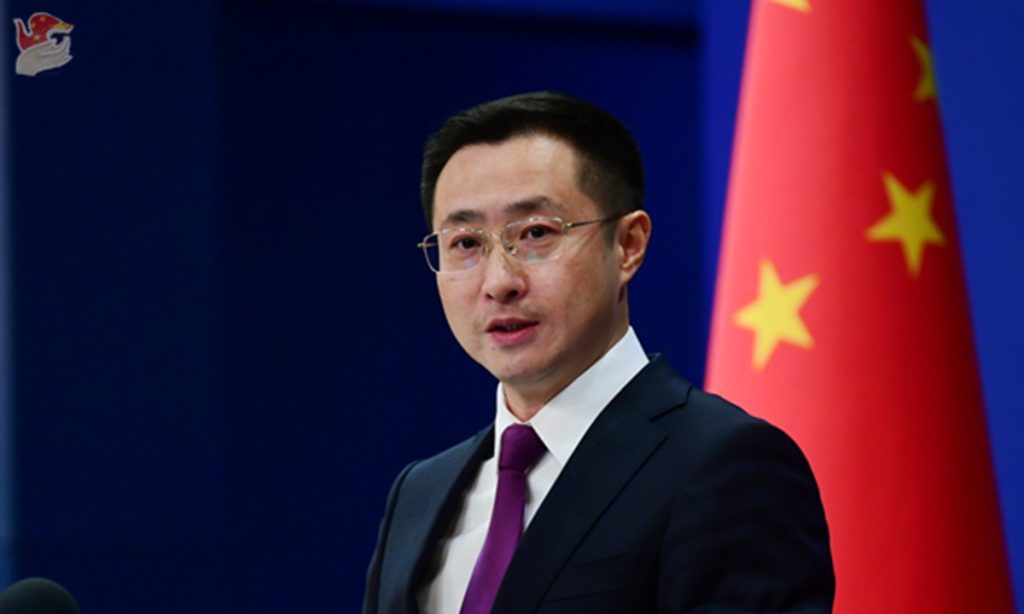
If individuals like Philippine Defense Secretary Gilberto Teodoro are allowed to repeatedly undermine efforts to stabilize bilateral relations, it is ultimately the fundamental interests of the Philippine nation and its people that will suffer, Chinese Foreign Ministry spokesperson Lin Jian said Friday.
Lin made the remarks in response to a media inquiry on that given Chinese officials recently said criticism from the Philippine side could make it more difficult for China to continue aiding the Philippines, whether China's announcement of sanctions against Teodoro will affect future Chinese aid to the Philippines.
In response, Lin stated that the decision to impose sanctions on Teodoro and his relatives, as published on the Ministry of Foreign Affairs website, has already explained the specific circumstances involved.
General Secretary of the Communist Party of China Central Committee and Chinese President Xi Jinping held a welcome ceremony on Friday for General Secretary of the Lao People's Revolutionary Party Central Committee and Lao President Thongloun Sisoulith, who is on a state visit to China.
China launched a special maritime law enforcement operation in the waters east of Taiwan island on Saturday. It is a necessary move in response to Japan and the Philippines' unilateral announcement of the so-called "maritime delimitation talks" on the east of China's Taiwan island, which constitutes a serious violation of China's territorial sovereignty and maritime rights and interests, the Xinhua News Agency reported on Saturday.
The operation, launched by China's Ministry of Transport, in coordination with the Fujian and Guangdong maritime safety administrations, the East China Sea Navigation Support Center, and the East China Sea Rescue Bureau, aims to fully exercise China's maritime administrative law enforcement jurisdiction, enhance deep-sea cruise enforcement and traffic control capabilities in key waters, ensure maritime traffic safety, and safeguard national rights and interests, Xinhua reported.
During the Philippine President's recent visit to Japan, the two countries issued a joint statement announcing the start of talks on the delimitation of exclusive economic zone and continental shelf between Japan and the Philippines. The area the two countries announced they will delimit is east of China's Taiwan island.
At a press briefing on Tuesday, Chinese Foreign Ministry Spokesperson Mao Ning emphasized that Japan and the Philippines' attempt to bypass China and initiate the so-called "maritime delimitation talks" constitutes a severe violation of UNCLOS and other international laws and basic norms governing international relations.
It also seriously infringes on China's maritime rights and interests and China will not allow this, she continued.
"According to China’s domestic law and international law including UNCLOS, China has exclusive economic zone and continental shelf in this area. As per UNCLOS, the delimitation of the exclusive economic zone and the continental shelf between States with opposite or adjacent coasts shall be effected by the States concerned by agreement on the basis of equity. Any delimitation concerning waters to the east of Taiwan must have China as a party to the talks," Mao stated.
At a press conference of the State Council Taiwan Affairs Office on Wednesday, spokesperson Zhu Fenglian said the waters slated for "delimitation" by Japan and the Philippines lie east of China's Taiwan island. Their proposed so-called "delimitation negotiations" gravely infringe on China's maritime rights and interests, run counter to international law and the basic norms governing international relations, and are entirely illegal, null and void.
Zhu noted that compatriots across the Taiwan Straits belong to the Chinese nation. They must uphold their national stance, stand for the fundamental interests of the nation, and jointly safeguard China's sovereignty and territorial integrity as well as the overall interests of the Chinese nation.
Should the DPP authorities collude with external forces to betray national interests, they will surely be spurned by compatriots on both sides of the Straits and punished by history, the spokesperson said.
A Chinese anti-epidemic medical expert team arrived in Kinshasa, the capital of the Democratic Republic of the Congo (DRC), on Tuesday for a three-month mission to support the Central African country's response to the Ebola outbreak.
Luku Maleyo Marius, a representative of the DRC Ministry of Health, welcomed the team at the airport, saying that China's dispatch of the medical experts represents timely and strong support for the Congolese government and people.
Whenever the DRC faces major public health challenges, China has consistently extended timely assistance, he said, adding that he looks forward to the mission further strengthening the country's epidemic prevention, control and treatment capacities, and helping bring the outbreak under control as soon as possible.
Lu Ming, head of the Chinese expert team, said the team would begin work promptly in line with the Congolese side's needs and would cooperate with local medical and disease control institutions to provide support in epidemic assessment, case management, and other areas.
He added that the team would work closely with the Congolese side to safeguard people's lives and health, contributing China's expertise to helping the DRC control the outbreak at an early stage.
On May 15, the DRC officially confirmed its 17th Ebola outbreak since 1976. Two days later, the World Health Organization declared the outbreak a public health emergency of international concern.
China's National Health Commission announced on Monday the decision to send a medical expert team to support the DRC's Ebola control efforts.
According to the commission, the first group consists of five members with extensive experience in epidemic control. They will also share practical response experience tailored to local conditions and help enhance the DRC's capacity for Ebola prevention, control and treatment.
As dawn breaks over Hangji town in Yangzhou, Jiangsu Province, the first rays of sunlight spill onto the bustling streets, illuminating the rhythmic hum of toothbrush production lines. In a cozy Beijing hutong, a grandmother beams with delight as she unwraps her brand-new toothbrush, its bristles gleaming with promise. Thousands of miles away, guests at opulent hotels in Dubai indulge in lavish oral care routines, where even this simplest act becomes a luxurious ritual. While on the other side of the globe, in the icy expanse of Antarctica, scientists endure frigid winds, finding small comfort in their trusted toothbrushes amid the stark wilderness.
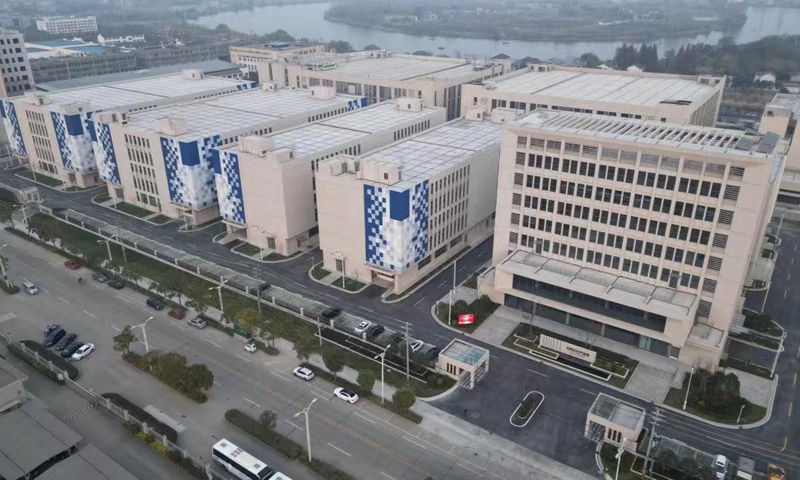
Lives that seem worlds apart are intricately connected by this small yet essential item produced in the small Chinese town of Hangji, known for its toothbrush manufacturing. Nearly one in every three toothbrushes in the world is produced here, Xinhua reported.
Hangji has become a global champion in toothbrush production, with local stories of hard work and prosperity passing down through generations. Residents here wield this small item as a tool that connects them to the world, mirroring the dedication of millions of workers over the last 75 years and embodying Chinese people's pursuit of a beautiful and healthy life.
The small town also serves as a testament to a dynamic and thriving China, where its people have marched forward in high spirits, embarking on a vibrant journey of pursuing a beautiful and flourishing life while connecting to the world. Returning to hometown
When the Global Times reporter entered, Tu Xinye, 37-year-old manager of Shuguang Toothbrush Factory, was instructing his workers to clean the factory's marble sign. The brand, with "Shuguang" meaning "dawn," is part of a cherished legacy from his grandfather and father, symbolizing the resilience and innovative spirit of his family.
Established in 1976, it was the first toothbrush factory in the town, witnessing the evolution from manual labor to mechanization, and later, the digital transformation brought about by the internet.
Tu has been gaining the attention of netizens in 2020 when he invited his grandfather and father - former factory managers - to join him for live selling, while sharing the trials and triumphs of the family business. Viewers were captivated by the heartfelt stories of dedication and the pursuit of prosperity that have defined the Tu family's journey in the toothbrush industry.
Returning home to inherit the family business was not Tu's initial choice. He pursued a degree in aircraft engine design in the UK, driven by dreams of aviation. However, the relentless efforts of his family to innovate and sustain the toothbrush factory ignited his sense of responsibility. Having observed his father tirelessly seeking market opportunities to provide jobs for local residents, he began to realize that the toothbrush industry was not just a business. It was a lifeline for his hometown.
In 2013, Tu decided to return to China and take over the family business. He dropped out of a PhD application, and started from the ground up, working as a factory worker to understand the intricacies of production. Over the last decade, he made efforts with all employees to double the factory's output and expanded its reach to over 40 countries worldwide.
Three generations face different challenges in different historical contexts. Tu's grandfather, the first factory manager, faced the challenges of the 1970s' planned economy in China when production was fine, but sales were not. In the early 1980s, as the planned economy began to dissolve and privatization took hold, Tu's father encountered a sudden drop in orders while navigating market complexities. During his childhood, Tu often found himself in the factory, waking up to his parents discussing machine upgrades and strategies to tap into overseas markets, despite a lack of English. However, their commitments to exploration opened doors to international markets and set the factory on a successful path.
In recent years, Tu has embraced e-commerce as a new frontier for growth. In October 2019, a leading Chinese e-commerce platform approached his factory to collaborate on a budget-friendly electric toothbrush. The factory invested in research and development, ultimately launching an electric toothbrush costing only 9.9 yuan ($1.4) that sold over 30,000 units in just one day. This success highlighted a growing demand for quality dental care products, even in rural areas, he told the Global Times.
"Was it worth investing hundreds of thousands into a workshop environment that consumers could not see? My parents questioned me. But I wanted foreign visitors to see that our production standards were on par with the best in the world," he explained. Tech drives greener future
In a small town covering just 40 square kilometers and home to fewer than 40,000 residents, an astonishing economic phenomenon is unfolding, marked by impressive figures.
What's behind it is an engine powered by technology and environmental sustainability.
In recent years, the toothbrush industry in Hangji has undergone a significant transformation, moving toward standardization and scalability. This shift has inspired a growing number of local youths to learn the craft.
Dong Tao, a recent university graduate from Yangzhou, exemplifies this trend. After leaving a large corporate job, he joined Sanfeng Brush Factory, where he started his day at 7:30 am, preparing materials and warming up machines on the production line. Dong finds fulfillment in his role, utilizing his engineering skills and applying his knowledge of WIFI modules and Bluetooth technology to develop new products. He noted that many young graduates are eager to return to their hometowns, leveraging national policies and local technological advancements to carve out new career paths.
The factory Dong works for has made attempts at innovation in a recent decade, supplying its toothbrushes to Xuelong 2, a Chinese icebreaking research vessel.
Li Yang, the factory's manager, introduced that they tried different ways to develop a toothbrush with bristles measuring just 0.1 millimeters in diameter, designed to prevent gum bleeding in extremely cold conditions. The brush handle is made from polylactic acid, which can biodegrade in as little as three months, minimizing the ecological impact of research activities in polar regions.
Driven by technological innovation, toothbrush manufacturers in Yangzhou are increasingly introducing smart toothbrush products. Tan Yuanshuai, the head of Fengyun Intelligent, a subsidiary of Sanfeng Brush Factory, showcased an AI-interactive toothbrush for children that utilizes a smart processor for real-time calculations and feedback, reminding kids to brush missed areas.
"The popularity of this toothbrush reflects the growing consciousness and emphasis of Chinese people on healthy and environmental friendly lifestyle," Tan said.
Similarly, Zhang Degang, the second-generation owner of Yangzhou Minsheng Brush Factory, highlights how the pursuit of quality and sustainability is reshaping their industry. Over the last decade, he has transformed production facilities to meet international standards, striving for a cleanroom environment akin to those used in chip manufacturing.
Zhang said that in the past, they primarily focused on contract manufacturing, but now Chinese brands are becoming increasingly innovative and popular in the world. Zhang's factory also incorporates Chinese cultural elements such as the Grand Canal and Wenchang Pavilion, into the design of the toothbrush handle, attracting overseas customers who have interest in Chinese culture.
The synergy of technology and sustainability is revitalizing local economies and inspiring a new generation of young people to pursue careers in their hometowns. Better life through hardworking
In 2011, the China Toothbrush Museum, the only special industrial culture museum in the world named after a toothbrush, was established in Hangji. This museum houses over a thousand toothbrush specimens that span more than a thousand years.
The story of Hangji reflects a typical narrative of how Chinese people have created a better life through hard work over the last 75 years. Countless small towns in China, which have achieved remarkable success through their advantageous industries, owe their progress to a group of pioneering individuals who are able to endure hardships.
In China, 70 percent of China's violins come from Huangqiao township in Jiangsu; 80 percent of freshwater pearls are sourced from Shanxiahu township in Zhejiang Province; and 70 percent of industrial brushes are produced in Yuantan, Anhui Province. These industries have become new engines for China's economy.
In a report on the achievements of economic and social development over the last 75 years, released by the National Bureau of Statistics on September 20, it was highlighted that under the strong leadership of the Communist Party of China, living standards and quality of life have seen historic improvements. As residents' incomes continue to grow, consumption levels have risen, with notable enhancements in quality and ongoing optimization of consumption structures.
Each artisan contributing to these progress writes their glory and dreams into the new journey of national rejuvenation. Today, the vibrant presence of hardworking individuals from various sectors is evident, showcasing a lively and colorful tapestry of life. These ordinary individuals, through their relentless efforts, are striving to increase their incomes and enhance their quality of life.
Tu has inherited the legacy of his family's toothbrush factory, "Dawn," along with a pursuit of excellence. His spirit of perseverance, adventurous drive, and practical determination resonate with countless young people striving to find their own "dawn" in the new global landscape.
For the global business community, including US companies, no one wants to "decouple" from China, as cooperation remains the mainstream, and mutual benefit is the goal, Wang Linjie, spokesperson from China Council for the Promotion of International Trade (CCPIT) told a press conference on Sunday.
Wang's remarks were in response to recent restrictive measures taken by the US against China, including raising the Section 301 tariffs on certain Chinese goods and strengthening export restrictions on technologies such as quantum computing and semiconductor manufacturing.
Wang said that the US has continuously outstretched the concept of national security, violating the principles of the market economy by politicizing and weaponizing economic, trade, and technological issues.
The WTO has already ruled that the US Section 301 tariffs violate WTO rules. The US tariff measures are typical examples of unilateralism and protectionism. These actions have disrupted the stability and smooth functioning of global supply chains, including those in the semiconductor and other technology manufacturing industries, and have seriously harmed the legitimate rights and interests of relevant countries and enterprises, Wang noted.
During the recent third meeting of the APEC Business Advisory Council for 2024, representatives from the Chinese and the US business communities emphasized the importance of keeping supply chains open, cooperative, and non-discriminatory, while ensuring supply chain policies comply with WTO rules and avoid distorting trade and investment, according to Wang.
Recently, the US-China Business Council released a survey on China's 2024 business environment, with participation from 140 member companies. 77 percent of the surveyed companies have been operating in China for over 20 years, with 40 percent reporting revenues exceeding $1 billion in China in 2023.
The survey revealed that American companies in China have stabilized their revenues over the past year, with 80 percent of respondents achieving profitability. These companies plan to reinvest profits generated in China this year, indicating a continued commitment to the Chinese market. The general consensus among the surveyed US businesses is that the Chinese market is a crucial component of their global strategy, according to Wang.
"This reflects that for the global business community, including American companies, no one wants to 'decouple' from China, as cooperation remains the mainstream, and mutual benefit is the goal," Wang noted.
Chinese President Xi Jinping has encouraged industrial workers to further contribute wisdom and strength to building a country that is strong in manufacturing and promoting the full revitalization of northeast China.
Xi, also general secretary of the Communist Party of China Central Committee and chairman of the Central Military Commission, made the remarks in a reply letter to representatives of workers from China First Heavy Industries Co. Ltd., a leading equipment manufacturer headquartered in Qiqihar City, northeast China's Heilongjiang Province.
A year-long global commemoration of Liu Hui, a prominent figure in ancient Chinese mathematics, kicked off in Paris on Tuesday.
Co-hosted by the China Association for Science and Technology (CAST), and the Chinese National Commission for UNESCO (The United Nations Educational, Scientific, and Cultural Organization), the commemoration celebrates Liu, whose works and theories not only had a profound impact on ancient Chinese mathematics, but also continue to provide a source of inspiration for scientific and technological progress and civilization exchanges in today’s world.
In November 2023, UNESCO held the 42nd session of the General Conference and approved the proposal made by the CAST to celebrate the 1,800th anniversary of Liu’s birth. It was the first time China had successfully applied for a birthday anniversary event for a scientist at UNESCO, said the CAST.
“We hope that through such events, we can showcase to a global audience the remarkable scientific achievements, exceptional ideas, and significant contributions to human civilization made by ancient Chinese scholars like Liu Hui,” said He Junke, executive president of the CAST, in a speech he delivered at the launch ceremony of the commemoration on Tuesday local time, at the headquarters of UNESCO in Paris.
Following the launch ceremony, an international symposium on Liu’s academic thought was also held at the headquarters of UNESCO on Tuesday afternoon, where global experts in the history of science and technology, and the history of mathematics, made multi-dimensional interpretations and held discussions on Liu’s academic contributions and scientific heritage, as well as their modern value.
Furthermore, they delved into the global dissemination of Liu’s mathematical ideas, and proposed suggestions to further promote China’s classical mathematical heritage.
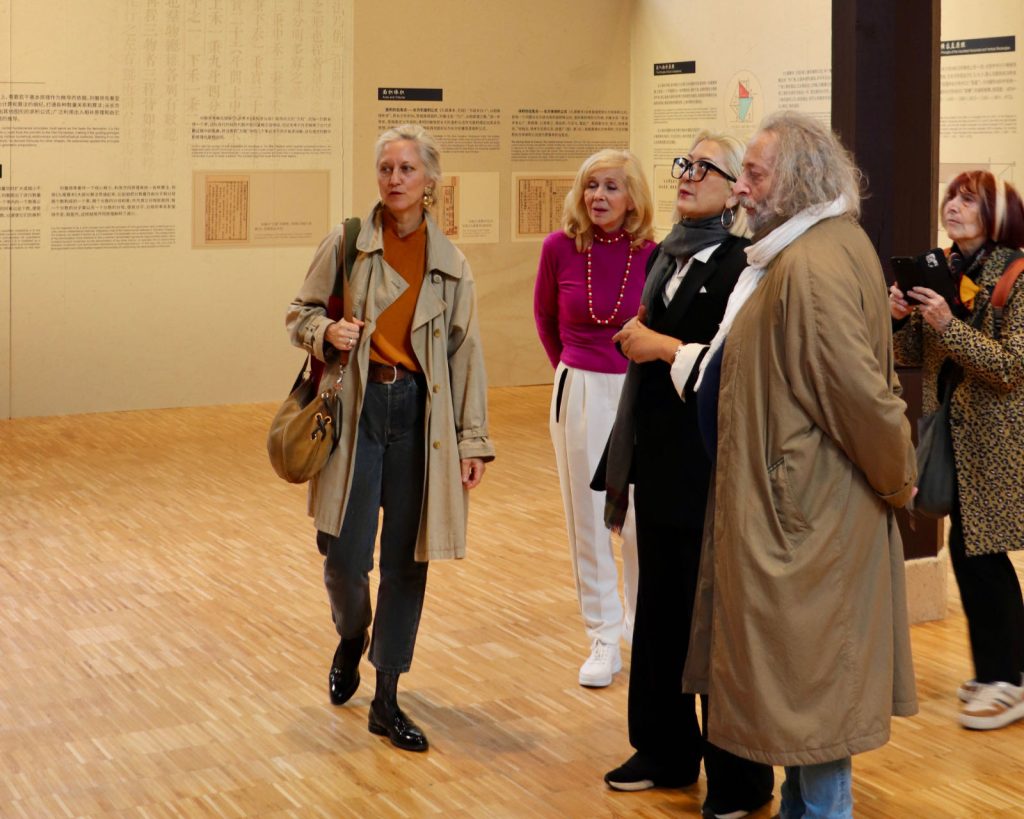
Earlier, as another highlight of this series of commemorative events, a themed exhibition featuring Liu’s achievements in mathematics kicked off at the Réfectoire des Cordeliers in Paris on Monday, so as to showcase Liu’s mathematical achievement, and to deepen the civilization exchanges and mutual understanding between China and the world, read the exhibition’s foreword.
Zhou Xiaohan, an associate research fellow at the Institute for History of Natural Sciences, Chinese Academy of Sciences (CAS), believes that the exhibition is an opportunity to show Liu’s important contributions, as well as the efforts made by Chinese and foreign scholars to study ancient scientific thought in China and their in-depth cooperation over the last century.
“Liu’s achievements are not only a treasure to China, but also a great legacy of human thought for the world,” he told the Global Times.
“I wish there were exhibitions and presentations [in commemoration of Liu] in more major cities around the world,” said Jeff Chen, a professor of mathematics at US St. Cloud State University who attended the commemoration on Tuesday.
“With the backing of UNESCO, such occasions will encourage more international interest in his works and attract students into the field of the history of mathematics in China. It will promote dialogue, discussions, and cultural exchanges between China and the rest of the world,” Chen told the Global Times.
One of the themes of our time is exchange and mutual learning among different civilizations, said Zou Dahai, a research fellow at the Institute for History of Natural Sciences, CAS, in a speech he delivered at the launch ceremony.
“Indeed, our commemoration of Liu Hui today, as well as the academic achievements supporting these activities are exactly the product of civilizational exchanges and mutual learning,” he said. The commemoration event in honor of Liu further conveys China’s outstanding scientific achievements and scientific culture to the international community, which showcases both the characteristics and the universality of Chinese mathematics, Zou told the Global Times on Monday, ahead of the ceremony.
“This is a model case showing the diversity and accommodation of Eastern and Western cultures,” Zou said.
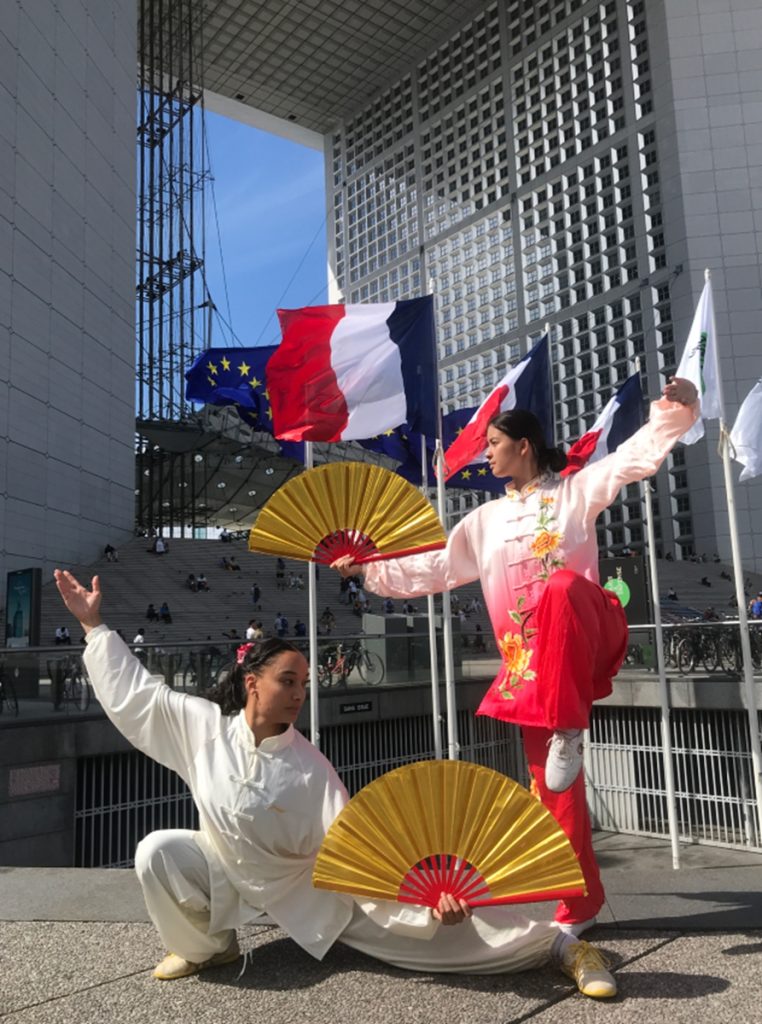
"Go, Paris Olympics!" Recently, in the training room of the French martial arts club "Oriental Martial Arts School," Fang Xiaofen, coach of the French national martial arts team, and her French students recorded a video together, cheering in Chinese to show their support for Chinese and French Olympic athletes.
"These students are happy to express their goodwill toward China in this way. Many of them are true 'China enthusiasts,'" Fang said with a smile.
Having taught martial arts in France for over 30 years, Fang has always used martial arts as a window for the French to understand China.
From participating in martial arts competitions to coaching the French national martial arts team, serving as an international martial arts referee, running her own martial arts clubs, and nurturing her daughter to carry on the martial arts tradition, Fang's journey in martial arts has been a process of building cultural bridges.
She said she has seen many French people fall in love with Chinese culture through practicing martial arts, so she hopes to continue helping more young French people understand and love martial arts.
A brilliant resume
Winning two gold medals in fist fighting and sword fighting techniques at the French Martial Arts Open, securing five consecutive championships at the French Martial Arts Championships, and taking home two gold medals for Yang and Chen-style tai chi at the Singapore International Martial Arts Competition, Fang has a brilliant resume shining with a collection of medals from various competitions.
Fang, born in Wenzhou, East China's Zhejiang Province, started practicing martial arts with her father at the age of 6. She pursued professional training at the Wenzhou Sports School before immigrating to France with her parents at the age of 20, but she never gave up on her passion for martial arts. After arriving in France, she immediately embarked on her martial arts journey.
"When I first arrived in France in 1988, wushu [martial arts] was still an unfamiliar term for many local French people. Some knew 'Chinese kung fu,' but they didn't understand the specifics of Chinese martial arts. In addition to practicing at local sports clubs, I also participated in various French martial arts competitions. My French wasn't very good at the time, but I wasn't afraid of losing - I saw it as an opportunity to prove my skills," Fang recalled. "I believed that only by achieving results in competitions could the French truly see the level of Chinese martial arts and appreciate its charm."
As she continued to compete, Fang gained a certain reputation in the French martial arts community. Her outstanding achievements also caught the attention of the French Ministry of Sports. In 2011, Fang was appointed coach of the French international martial arts team. During her tenure, the French team won four championships in events like broadsword and tai chi at the 2012 European Martial Arts Championships, raising the team's ranking to the top three in Europe. In the same year, the French team won the spear event at the World Junior Martial Arts Championships in Macao, China, marking France's first world championship in martial arts. In 2013, Fang was officially appointed as the head coach of the French national martial arts team.
When discussing her coaching achievements, Fang often focused more on the dedication and passion of French martial arts enthusiasts.
"Unlike practicing martial arts in China, the venues, facilities, and training conditions in France are relatively simple. But the local martial arts enthusiasts are highly motivated and train hard. As professional coaches, we help them maximize their physical strengths, design innovative moves, and develop their own style and competitive edge," said Fang. Building bridge
Now 56, Fang not only coaches the French national martial arts team, but also serves as an international referee for the International Wushu Federation. She also runs several martial arts clubs with more than 200 students. In addition to her sports-related work, Fang is passionate about promoting martial arts to the French public through performances, exchanges, and free training programs at French schools.
"I've taught thousands of students at my martial arts clubs, including people of all ages and backgrounds, and most of them are French. They work in different jobs during the week, but on weekends, they gather at the martial arts clubs. Some even bring their whole families," Fang said. Her clubs offer various types of martial arts training, including long fist, southern fist, tai chi, swordsmanship, broadsword, spear, staff, baguazhang (the eight-diagram palm), yingzhaoquan (Eagle Claw boxing), and tanglangquan (Praying Mantis boxing), providing diverse options for French students.
Fang is often moved by the passion of the French students for martial arts. Some parents drive an hour each way just to bring their children to a one-hour practice session, and they never miss a week. Some martial arts enthusiasts have inspired their spouses, children, and even grandchildren to start martial arts, turning club practices into family activities. Some children have even learned many Chinese martial arts terms and fallen in love with the Chinese language. One elderly student developed a deep love for Chinese culture through tai chi and eventually became a tea ceremony master. In Fang's clubs, martial arts have become a bridge connecting French students to Chinese culture, and more and more French students are filled with admiration and goodwill toward China.
In 2018, Fang organized a group of her club students to visit her hometown for a martial arts exchange at the Wenzhou Sports School. Among the 10 participants were engineers, teachers, and doctors - all martial arts enthusiasts who fell in love with Chinese martial arts traditions, local delicacies like wonton and rice cakes, and explored the Wenzhou Museum. They even went shopping for traditional Chinese crafts to bring back to France as gifts for their friends.
"After returning to France, they enthusiastically introduced China to their friends, sharing stories about China's development, the friendliness of the Chinese people, and the richness of Chinese cuisine. They kept these fond memories of the trip in China and couldn't help but share them with others," Fang said. "One student told me that the trip was the best experience of his life. Hearing such high praise, I felt very touched."
Passing on tradition
Recently, at the College of Physical Education and Health of Wenzhou University, Fang, accompanied by her 17-year-old daughter, martial arts enthusiast Fang Lefang, engaged in a lively martial arts exchange with the university's martial arts team. Together, they practiced tai chi, southern fist, and Shaolin fist. As a professional martial arts coach and referee, Fang praised the students' dedication and politeness, which she said are integral to the spirit of Chinese martial arts.
"Martial arts keep people energetic and help them become more confident and courageous. These are the valuable qualities I hope my daughter can acquire through martial arts practice," said Fang.
Born in 2007, Fang Lefang grew up immersed in martial arts under her mother's guidance. Over the past two years, she has made her mark in various international martial arts competitions, winning one silver and two bronze medals at the World Traditional Kung Fu Championships and one gold and one silver at the European Traditional Wushu Championships. She also claimed the gold medal at a French youth tai chi competition. Fang believes her daughter's connection with martial arts developed naturally.
"Lefang has always lived in France, and my husband is French, but I've always hoped she wouldn't forget the 'Chinese cultural gene' inside her," Fang said. She has taught her daughter Chinese from a young age, guided her in learning Chinese martial arts, sent her on "root-seeking" trips to China, and arranged for her to study and train in martial arts in Wenzhou for a full year. Fang hopes that her daughter will carry forward the cultural roots of the Chinese nation.
Now a member of the French Association of Second-Generation Chinese Entrepreneurs, Fang Lefang will participate in the upcoming World Tai Chi Championships in Singapore. "Through competing in martial arts around the world, she has become more independent and confident. No matter how far her martial arts journey takes her, I believe this experience will be a lifelong spiritual asset for her," Fang said. "Perhaps one day, my daughter, my club students and I will all appear together in the arena. Martial arts keep me feeling young and passionate. I look forward to participating in competitions with my students even when I'm 60 years old."
If you asked people about artificial intelligence (AI) 10 years ago, most wouldn't have understood its meaning. Today, however, AI has been gradually integrated into all aspects of daily life in China, such as travel, retail, medical, entertainment, logistics and other services sectors.
Analysts have noted that the acceleration of digitalization and expanded intelligence applications in the services industry have become a new trend, driven largely by advancements in AI technologies.
Industry insiders that a more extensive and faster digital transformation of the services industry is essential to ensure broader benefits for the public. In the future, thousands of industries are expected to be empowered by AI, and originally expensive services will also go to the public and serve daily life.
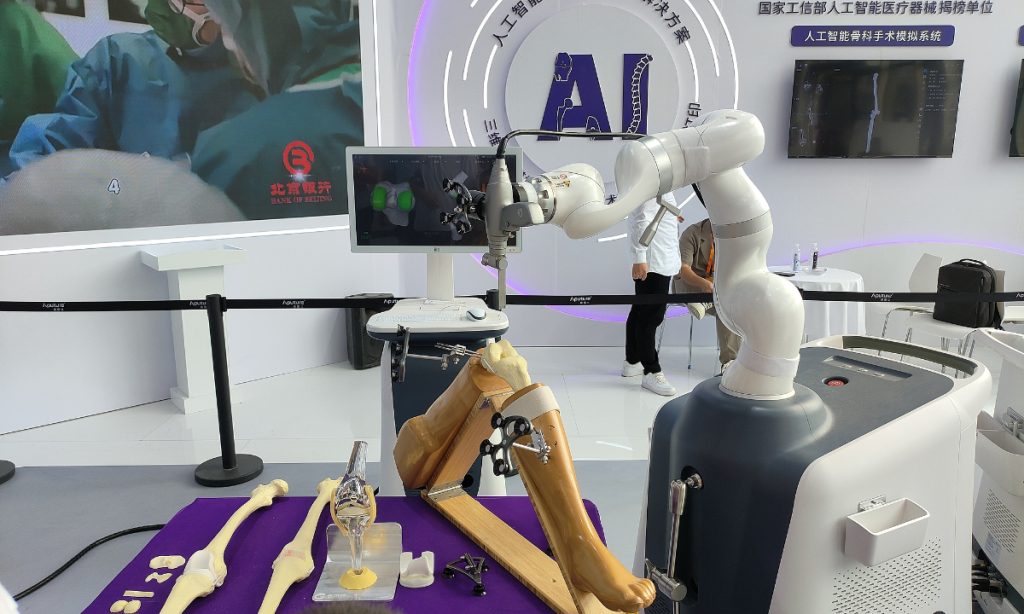
In fact, several AI-powered service examples were showcased at the just-concluded 2024 China International Fair for Trade in Services (CIFTIS) in Beijing.
Deep integration
For example, AI has already assisted many people in job seeking in China. At the 2024 CIFTIS, Alipay unveiled an AI-powered public employment robot named Xiaogu, designed to support the intelligent transformation of employment services.
According to existing regional data, the matching rate of people and job posts has been increased by at least 10 times, the Global Times learned from Alipay.
While AI-powered services like this may go unnoticed by many, the application of AI technologies in sectors such as tourism and gaming is more visible.
The integration of AI with scenic spots is creating a new and enhanced travel experience.
For example, in the scenic area of Mount Huangshan in East China's Anhui Province, an AI escort service has been implemented, and it was showcased at the 2024 CIFTIS.
An AI-powered application can recommend services throughout the entire journey, such as tour guides, taxi bookings, and food options, based on tourists' spatial positioning, the Global Times has learned.
"AI technologies can empower digital creative content production, and the digital content can be combined with the natural scenes within the scenic spots using augmented reality (AR) technology carriers, such as AR glasses," Chen Xi, a vice president of Rokid, a Hangzhou-based AR tech startup, told the Global Times on Friday.
AR is a technology that enhances or provides additional information about what people see in physical reality through digital images, sounds, and text. AI enhances AR by enabling it to recognize and augment the real world more effectively.
"In addition to immersive travel experience realized through AR technology, we also created some treasures hunting games with the help of AR technology in the context of local culture to help people, especially the kids enjoy the travel," Chen said, noting that such applications will also largely improve travel experiences at night.
AI technologies have also been applied in museums. Many global tourists visit exhibition halls using AR technologies in Chinese museums, enhancing the quality of their travel experience, as AI helps remove some barriers such as in language, Tian Feng, dean of SenseTime's Intelligence Industry Research Institute, told the Global Times on Friday.
Chen said that Rokid uses AI to do recognition of exhibits, and then uses AR technology to make the text explanation of the museum visual in about 200 museums in China.
OUTPUT, a Shanghai-based new digital content operation platform, has created digital content and scenario-based experience works in conjunction with Beijing's Palace Museum and Shanghai's Yuyuan Garden.
"We have helped showcase the treasures of the Palace Museum digitally in Singapore and participated in the Yuyuan Garden Lantern Festival in Paris and Shanghai to celebrate the 60th anniversary of the establishment of diplomatic relations between China and France," Liu Yinmeng, founder and CEO of OUTPUT, told the Global Times.
Further development
"The development of AI technologies will bring great change and opportunity to many industries, such as tourism, sport and gaming," Tian said.
"AI Plus" was mentioned in the Government Work Report for the first time in 2024, saying that China will launch an AI Plus initiative, and build digital industry clusters with international competitiveness and will also promote the digitalization of the service sector.
"AI Plus" will serve as a key driving force, deeply integrating with industries such as healthcare, education, and cultural tourism, and promoting the transformation and upgrading of traditional industries, Wang Peng, an associate research fellow at the Beijing Academy of Social Sciences, told the Global Times on Sunday.
In 2023, China unveiled a plan for the overall layout of the country's digital development, which included support for the in-depth integration of digital technology and the real economy and the application of digital technology in the agriculture, manufacturing, finance, education, medical services, transportation and energy sectors.
China has experienced rapid development in the creative industry, also known as the orange industry, industry observers said on Friday at the Orange Industry and Sustainable Investment Forum, a sub-forum of the 2024 CIFTIS.
The UN defines the creative economy as cycles of creating, producing, and distributing goods and services that use creativity and intellectual capital as primary inputs.
According to UNCTAD, in 2020, China was by far the largest exporter of creative goods, at a reported value of $169 billion. As the service sector has gained prominence in the creative industries, China's creative service exports have grown from $59 billion in 2020 to $67 billion in 2022.
With the rapid advancement of key technologies such as AI, big data, cloud computing, and 5G communication in the country, China's orange industry is benefiting from strong technical support and is gradually moving toward a leading position globally, Liu said.
"In the coming years, China's orange industry is expected to see significant growth. Technological innovation, market demand and policy support will promote the orange industry to become an important force in China's economic diversification," Liu noted.
Analysts have noted that the orange industry exemplifies creativity and innovation, aligning closely with China's pursuit of an innovation-driven development strategy and the cultivation of high-quality new productive forces.