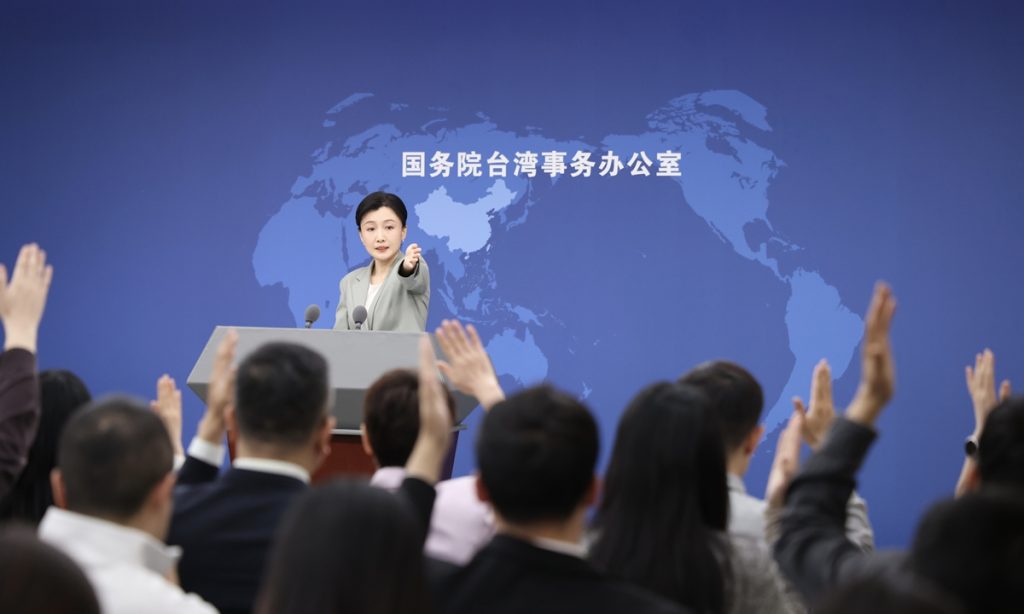
The maritime areas that Japan and the Philippines have announced for delimitation are located east of the island of Taiwan, where China possesses exclusive economic zones and continental shelves, Zhang Han, a spokesperson for the State Council Taiwan Affairs Office, told a regular press conference on Wednesday.
Japan and the Philippines have bypassed China and unilaterally initiated so-called maritime delimitation negotiations, which seriously violates international law, including the United Nations Convention on the Law of the Sea (UNCLOS), as well as the basic norms of international relations, and gravely infringes upon China's maritime rights and interests, added Zhang.
Zhang's remarks came in response to the recent claims by Lai Ching-te, leader of the Taiwan region, that China is not a coastal state, has no rights to intervene in the Japan-Philippines exclusive economic zone negotiations and that China's legal operations by authorities including the China Coast Guard have fueled regional anxiety.
The relevant departments on the mainland conducting law enforcement patrols in these waters in accordance with the law is entirely justified and necessary, and it is a righteous action to safeguard national sovereignty and maritime rights and interests, the spokesperson said.
The DPP authorities have turned a blind eye and feigned deafness to the infringing actions of Japan and the Philippines; instead, they have seized the opportunity to vigorously spread "Taiwan independence" separatist fallacies, inciting "anti-mainland" and "resisting mainland" sentiments, noted Zhang, adding that they have already become accomplices of external forces in harming the overall interests of the Chinese nation — vile, shameless, and destined to be held accountable.
China places ties with Myanmar as a priority in neighborhood diplomacy, and supports the new Myanmar government in coordinating development and security imperatives to find a correct path of development that suits its national conditions and wins popular support, Chinese President Xi Jinping said on Tuesday.
Xi made the remarks when holding talks with President of Myanmar Min Aung Hlaing, who is on a state visit to China.
A white paper released Wednesday by the State Council Information Office highlighted China's role in actively advancing efforts for building a more just and equitable global governance system.
As a responsible major country, China champions the building of a community with a shared future for humanity and takes the lead in practicing true multilateralism, according to the white paper, titled "More Just and Equitable Global Governance: China's Principles, Proposals and Actions."
As a major country with the best peace and security record, China has enshrined in its Constitution a commitment to peaceful development, the white paper noted.
China champions the vision of common, comprehensive, cooperative, and sustainable security, and has put forward the Global Security Initiative and acted on its principles, contributing to lasting world peace and stability, it said.
As the largest developing country, China has always pursued its own growth in the context of humanity's shared development and upheld openness, win-win cooperation, inclusiveness, and shared benefits, according to the white paper.
Through Chinese modernization, the country has provided the world with new opportunities and boosted the global drive for modernization, it added.
China advocates and practices true multilateralism and remains an active champion and strong proponent of multilateral cooperation, read the white paper.
Noting that China will always be a member of the Global South, the white paper said China has firmly safeguarded the common interests of the Global South in international affairs, and led the Global South in building strength through joint efforts.
China has proposed the Global Civilization Initiative and promoted its implementation, championing the common values of humanity and fostering deeper exchanges and understanding among different peoples, and wider interactions and greater integration of diverse cultures in a joint effort to advance the development and progress of human civilization, it added.
China has always supported Iran's reasonable and legitimate claims and its efforts in safeguarding its own sovereignty and security, Chinese Foreign Minister Wang Yi said Wednesday.
Wang made the remarks in a phone conversation with Iranian Foreign Minister Seyed Abbas Araghchi.
---
The issue of navigation through Strait of Hormuz should be properly addressed -- Chinese FM
---
China ready to strengthen communication, coordination with Iran, will continue to contribute to regional peace and stability -- Chinese FM
A suspect surnamed Cai, who had long been hiding overseas and is accused of organizing illegal border crossings, was successfully extradited back to China on June 8, China's National Immigration Administration (NIA) said on its WeChat account on Thursday.
In February 2024, immigration authorities in Zhenjiang, East China's Jiangsu Province, uncovered a transnational criminal syndicate that organized Chinese citizens to leave the country illegally through third countries.
Investigations found that between 2023 and 2024, a Chinese national surnamed Cai and his accomplices colluded with human smugglers both inside and outside China to organize multiple Chinese citizens to be smuggled abroad for illegal activities. The NIA designated the case as a major case under supervision and listed Cai as a fugitive target, said the administration.
In March 2026, Cai was apprehended by police in a foreign country, which subsequently notified Chinese authorities. Under the guidance of the Ministry of Public Security and the NIA, the case-handling authorities promptly submitted an extradition request. China's foreign affairs authorities actively facilitated coordination efforts, with close cooperation between agencies at home and abroad helping advance the extradition process.
In late May, the foreign country approved the extradition request. Cai has since been escorted back to China, and further investigation into the case is underway.
A spokesperson for the NIA said the successful extradition represents another important achievement in China's efforts to strengthen international law enforcement cooperation and pursue fugitives overseas. It also demonstrates China's firm resolve to crack down on cross-border crimes and bring fugitives to justice wherever they may flee.
The NIA said it will continue working with relevant authorities to deepen international law enforcement cooperation, dismantle transnational human-smuggling networks, and safeguard national security and border stability.
The administration also issued a warning to fugitives still at large, saying that no one can escape the reach of the law. Overseas locations are neither safe havens from prosecution nor places beyond the rule of law. Any attempt to evade justice will ultimately be met with legal punishment, and the only viable option is to voluntarily return to China and surrender to authorities in exchange for possible leniency.
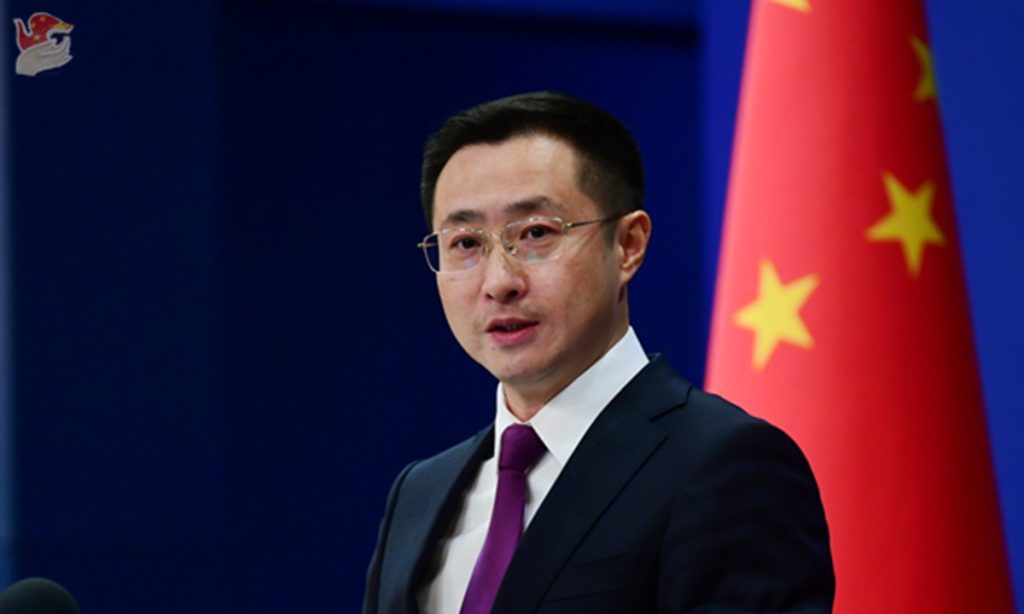
If individuals like Philippine Defense Secretary Gilberto Teodoro are allowed to repeatedly undermine efforts to stabilize bilateral relations, it is ultimately the fundamental interests of the Philippine nation and its people that will suffer, Chinese Foreign Ministry spokesperson Lin Jian said Friday.
Lin made the remarks in response to a media inquiry on that given Chinese officials recently said criticism from the Philippine side could make it more difficult for China to continue aiding the Philippines, whether China's announcement of sanctions against Teodoro will affect future Chinese aid to the Philippines.
In response, Lin stated that the decision to impose sanctions on Teodoro and his relatives, as published on the Ministry of Foreign Affairs website, has already explained the specific circumstances involved.
General Secretary of the Communist Party of China Central Committee and Chinese President Xi Jinping held a welcome ceremony on Friday for General Secretary of the Lao People's Revolutionary Party Central Committee and Lao President Thongloun Sisoulith, who is on a state visit to China.
China launched a special maritime law enforcement operation in the waters east of Taiwan island on Saturday. It is a necessary move in response to Japan and the Philippines' unilateral announcement of the so-called "maritime delimitation talks" on the east of China's Taiwan island, which constitutes a serious violation of China's territorial sovereignty and maritime rights and interests, the Xinhua News Agency reported on Saturday.
The operation, launched by China's Ministry of Transport, in coordination with the Fujian and Guangdong maritime safety administrations, the East China Sea Navigation Support Center, and the East China Sea Rescue Bureau, aims to fully exercise China's maritime administrative law enforcement jurisdiction, enhance deep-sea cruise enforcement and traffic control capabilities in key waters, ensure maritime traffic safety, and safeguard national rights and interests, Xinhua reported.
During the Philippine President's recent visit to Japan, the two countries issued a joint statement announcing the start of talks on the delimitation of exclusive economic zone and continental shelf between Japan and the Philippines. The area the two countries announced they will delimit is east of China's Taiwan island.
At a press briefing on Tuesday, Chinese Foreign Ministry Spokesperson Mao Ning emphasized that Japan and the Philippines' attempt to bypass China and initiate the so-called "maritime delimitation talks" constitutes a severe violation of UNCLOS and other international laws and basic norms governing international relations.
It also seriously infringes on China's maritime rights and interests and China will not allow this, she continued.
"According to China’s domestic law and international law including UNCLOS, China has exclusive economic zone and continental shelf in this area. As per UNCLOS, the delimitation of the exclusive economic zone and the continental shelf between States with opposite or adjacent coasts shall be effected by the States concerned by agreement on the basis of equity. Any delimitation concerning waters to the east of Taiwan must have China as a party to the talks," Mao stated.
At a press conference of the State Council Taiwan Affairs Office on Wednesday, spokesperson Zhu Fenglian said the waters slated for "delimitation" by Japan and the Philippines lie east of China's Taiwan island. Their proposed so-called "delimitation negotiations" gravely infringe on China's maritime rights and interests, run counter to international law and the basic norms governing international relations, and are entirely illegal, null and void.
Zhu noted that compatriots across the Taiwan Straits belong to the Chinese nation. They must uphold their national stance, stand for the fundamental interests of the nation, and jointly safeguard China's sovereignty and territorial integrity as well as the overall interests of the Chinese nation.
Should the DPP authorities collude with external forces to betray national interests, they will surely be spurned by compatriots on both sides of the Straits and punished by history, the spokesperson said.
A Chinese anti-epidemic medical expert team arrived in Kinshasa, the capital of the Democratic Republic of the Congo (DRC), on Tuesday for a three-month mission to support the Central African country's response to the Ebola outbreak.
Luku Maleyo Marius, a representative of the DRC Ministry of Health, welcomed the team at the airport, saying that China's dispatch of the medical experts represents timely and strong support for the Congolese government and people.
Whenever the DRC faces major public health challenges, China has consistently extended timely assistance, he said, adding that he looks forward to the mission further strengthening the country's epidemic prevention, control and treatment capacities, and helping bring the outbreak under control as soon as possible.
Lu Ming, head of the Chinese expert team, said the team would begin work promptly in line with the Congolese side's needs and would cooperate with local medical and disease control institutions to provide support in epidemic assessment, case management, and other areas.
He added that the team would work closely with the Congolese side to safeguard people's lives and health, contributing China's expertise to helping the DRC control the outbreak at an early stage.
On May 15, the DRC officially confirmed its 17th Ebola outbreak since 1976. Two days later, the World Health Organization declared the outbreak a public health emergency of international concern.
China's National Health Commission announced on Monday the decision to send a medical expert team to support the DRC's Ebola control efforts.
According to the commission, the first group consists of five members with extensive experience in epidemic control. They will also share practical response experience tailored to local conditions and help enhance the DRC's capacity for Ebola prevention, control and treatment.
"The allegation of so-called 'Chinese espionage threat' is entirely fabricated and constitutes malicious slander. We strongly condemn this," said a spokesperson from the Chinese Embassy in UK when asked to comment on the so-called "warning" issued by the UK Security Service (MI5), together with intelligence agencies from other "Five Eyes" countries, alleging that Chinese intelligence services are approaching individuals in Western countries through fake online recruitment schemes in order to steal military, political, and technological intelligence, according to the embassy on Thursday.
It must be pointed out that the "Five Eyes" are the world's largest intelligence network. Its members have engaged in unscrupulous espionage and intelligence-gathering activities around the globe. They are the real threat to peace-loving countries, the spokesperson said.
"We urge the UK side to immediately stop this clumsy self-staged show of thief crying catch thief. Otherwise, it will only bring shame upon itself," the spokesperson continued.
Chinese Foreign Ministry also responded on the same day. Spokesperson Mao Ning said as the world's largest intelligence cooperation network, the "Five Eyes" has long engaged in massive systemic espionage all over the world. It is ironic that such an organization is accusing China of "spy threat."
According to Reuters on Wednesday local time, security agencies from the US, Britain, Canada, Australia and New Zealand claimed that Chinese military intelligence services ultimately seek to "acquire privileged military, political and economic intelligence that can provide China with a strategic and tactical advantage over the Five Eyes."
A Chinese expert told the Global Times on Thursday that the Five Eyes Alliance's current hype over the so-called "Chinese espionage threat" is essentially a carefully crafted rhetorical trap. Ostensibly framed as an effort to safeguard "national security," the campaign is in reality designed to fuel the "China threat" narrative, the expert stressed.
Regarding similar allegations, China has stated its position more than once. Chinese Foreign Ministry spokesperson Mao Ning said during a press conference in November 2025 that China never interferes in other countries' internal affairs and has absolutely no interest in the so-called "intelligence" of the UK Parliament.
The response came after MI5 in 2025 issued an official warning to British politicians about two LinkedIn accounts that it claimed were posing as "headhunters" but were in fact operating on behalf of the Chinese Ministry of State Security.
"Time to stop those phantom allegations and the false projection," the spokesperson said at the time.
In global geopolitics, the Five Eyes ranks among the world's largest intelligence surveillance blocs, having long leveraged its technological advantages to conduct indiscriminate mass surveillance across the globe, Wang Hanyi, a research fellow at the Shanghai International Studies University, told the Global Times on Thursday. Wang noted that the bloc's credibility is therefore highly suspect when it loudly hypes alleged "Chinese espionage threat."
Wang said that the joint initiative results from a mix of domestic pressures and the strategy to contain China. Some Five Eyes countries are plagued by weak economic growth, worsening social conflicts and rising political polarization. Against this backdrop, exaggerating external threats serves as an easy tool to divert domestic disputes and consolidate political consensus, the expert added.
The Reuters report noted on Wednesday that although there have been similar so-called warnings from individual countries in the past, the joint bulletin was described as unprecedented.
"Such an 'unprecedented' scale stems from a collective anti-China anxiety and coordinated escalation of containment strategies against China," Wang said.
Their practice will severely disrupt regular people-to-people exchanges, normal economic and trade cooperation between China and certain Western countries, and erode the long-built foundation for global cooperation, the expert noted.