China’s tech-heavy STAR 50 Index hits a new record high on AI-driven rally Wednesday

China's tech-heavy STAR 50 Index, tracking the 50 largest and most liquid stocks on the high-tech board, soared to a record high on Wednesday fueled by extraordinary financial performances of semiconductor, artificial intelligence (AI) and battery companies.

Market analysts said that they are optimistic about the outlook of China's stock market, betting on opportunities from the rapid technological development and robust economic resilience of the world's second largest economy.

On the first trading day after the 5-day May Day holidays, the STAR 50 Index surged 9 percent in intraday trading. Shares of chip developer Hygon Information Technology Co Ltd saw intraday gains of 20 percent, while integrated circuit design firm Montage Technology and chipmaker Biwin Storage Technology Co Ltd were both up 16 percent. The index closed 5.47 percent higher at 1,656.95 points.

As China accelerates the development of new quality productive forces, the strong financial results of those companies is mainly driven by rapid iteration in AI applications, rising demand for advanced semiconductor manufacturing equipment and computing power, and a continued recovery in new-energy materials, Yang Delong, chief economist at Shenzhen-based First Seafront Fund, told the Global Times on Wednesday.

Yang said that the recent bull runs for A-shares and H-shares will likely continue this year, with Chinese high-tech companies bringing more investment opportunities and attracting continuous inflows of foreign capital.

According to Shanghai-based financial data provider Wind Information, the qualified foreign institutional investors' (QFIIs) holdings are mainly focused on sectors including banks, electronics, and telecommunications.

The electronics sector saw the largest increase in the number of shares held by QFIIs in the last three months, led by telecommunications sector which recorded the highest growth in the market value of QFII holdings, up by 10 billion yuan ($1.46 billion), the Securities Daily reported.

Foreign financial institutions told the Global Times on Wednesday that China's economic and financial resilience has been evident this year. The country's full-year growth is projected to stay within the target range of 4.5-5 percent, underpinning the stock market. The institutions are upbeat on sectors including AI technology, energy, and raw materials.

China's GDP growth rate of 5 percent year-on-year in the first quarter exceeded market expectations, according to a note released by Goldman Sachs on April 24. It highlighted notable resilience in Chinese financial markets despite external uncertainties.

There are offsetting factors and policy tools that the Chinese government can use to keep economic growth within its target range for the remainder of 2026, for instance, China's advantages in new-energy products, resilient supply chains, and policy flexibility, according to the note.

Chinese stocks closed broadly higher on Wednesday, with the benchmark Shanghai Composite Index up 1.17 percent at 4,160.17 points. The Shenzhen Component Index closed 2.33 percent higher at 15,459.62 points. The ChiNext Index, tracking China's Nasdaq-style board of growth enterprises, gained 2.75 percent to close at 3,778.16 points.

Wang Zonghao, head of China equity strategy research at UBS, forecasted more appreciation in both the A-shares and H-shares over the coming two months, noting that the A-share market is expected to benefit from robust profit expansion in the industrial sector, according to a note sent to the Global Times.

The analyst pointed to investment opportunities in AI hardware, electricity equipment, and non-ferrous metals.

"As the Iran conflict has driven up global energy and commodity prices, corporate profit margins may be under pressure in the next few quarters. However, this is a global headwind, and Chinese enterprises will feel less impact compared with those from other regions," read the note, outlining reasons including China's ample strategic petroleum reserves and greater adoption of renewable energy and electric vehicles.
China's 17-year-old state-owned asset law of enterprise set for first major overhaul

China's Law on State-Owned Assets of Enterprises, which has been in effect for nearly 17 years, is undergoing its first major revision. A draft version was submitted to a standing committee session of China's top legislature for its first reading on Monday, according to the Xinhua News Agency.

The revision followed a problem-oriented approach, balanced development and security, and upheld the principle of seeking progress while maintaining stability, according to Xinhua.

The draft made comprehensive changes to the existing law, revising 71 articles and adding 32 new ones, resulting in a total of 109 articles across nine chapters, according to Xinhua.

Key revisions include improving the modern enterprise system with Chinese characteristics, refining the supervision and management system for state-owned assets, clarifying the principle of classified management, and strengthening the management system for state-owned capital gains, Xinhua reported.

Enacted on May 1, 2009, the Law on State-Owned Assets of Enterprises has served as the foundational legal framework for the supervision and management of state-owned assets in China, according to information posted on the website of the National People's Congress.

Over the past 17 years, the law has provided strong legal support for the reform and development of state-owned enterprises (SOEs), according to Xinhua.

In the context of the complex and profound changes in China's development environment during the 15th Five-Year Plan (2026-30) period, revising and improving this law is of great significance. It aims to provide stronger legal guidance and guarantees for the reform and development of state-owned assets and SOEs, and to strengthen the rule of law in state-owned asset supervision and management, thereby ensuring the sustained and healthy development of the state-owned economy.

China will continue to deepen the reform of SOEs, officials said at a press conference in January. Efforts will be made in aspects such as the optimization and restructuring of the state-owned economy's layout, promoting the deep integration of sci-tech and industrial innovation, and continuously improving the supervision system and mechanism for state-owned asset management.

This year's Government Work Report also gave instructions on work related to SOEs. "We will formulate and implement plans for further deepening SOE and state-capital reform to refine the layout of the state-owned sector and adjust its structure," read the report.

China hopes all parties will work together to prevent further escalation, says FM on Iranian forces opening fire on an Indian-flagged vessel in Strait of Hormuz

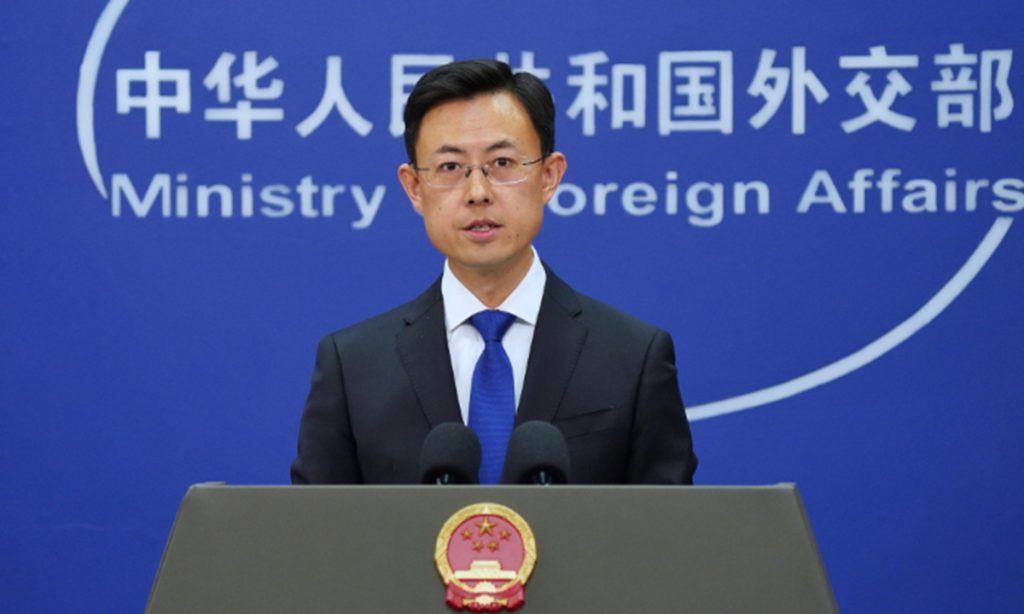
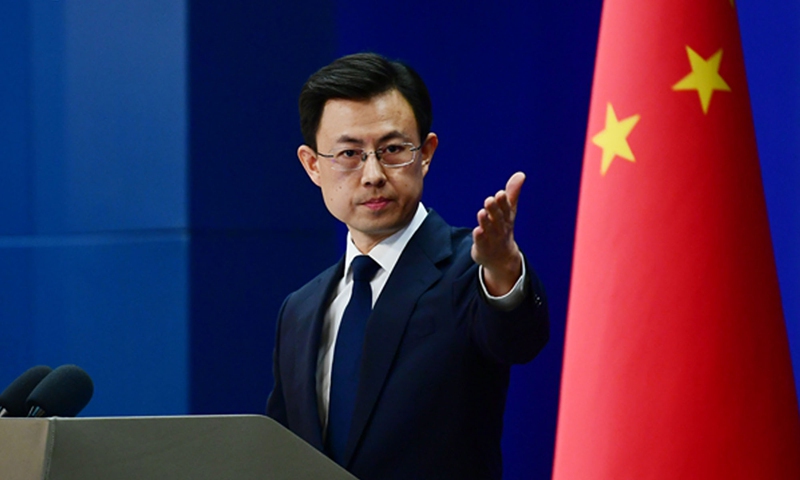
"I have already stated China's position on the Strait of Hormuz issue. We would like to reiterate that the Strait of Hormuz is an international waterway, and keeping it open to navigation serves the common interests of countries in the region and the international community," Guo Jiakun, a spokesperson for the Chinese Foreign Ministry, said at a regular press conference on Monday.

Guo was responding to a reporter's question citing reports that Iranian forces had opened fire on an Indian-flagged vessel in the Strait of Hormuz, raising concerns over navigational safety, and the reporter asked how China views the escalation and what measures it is considering to safeguard its shipping and energy interests in the strait.

China hopes all parties will work together to prevent the situation in the Strait from deteriorating further, and stands ready to continue making efforts alongside the international community to help de-escalate tensions, Guo stressed.

China's consumer rights watchdogs summon IHG over allegedly unfair membership terms

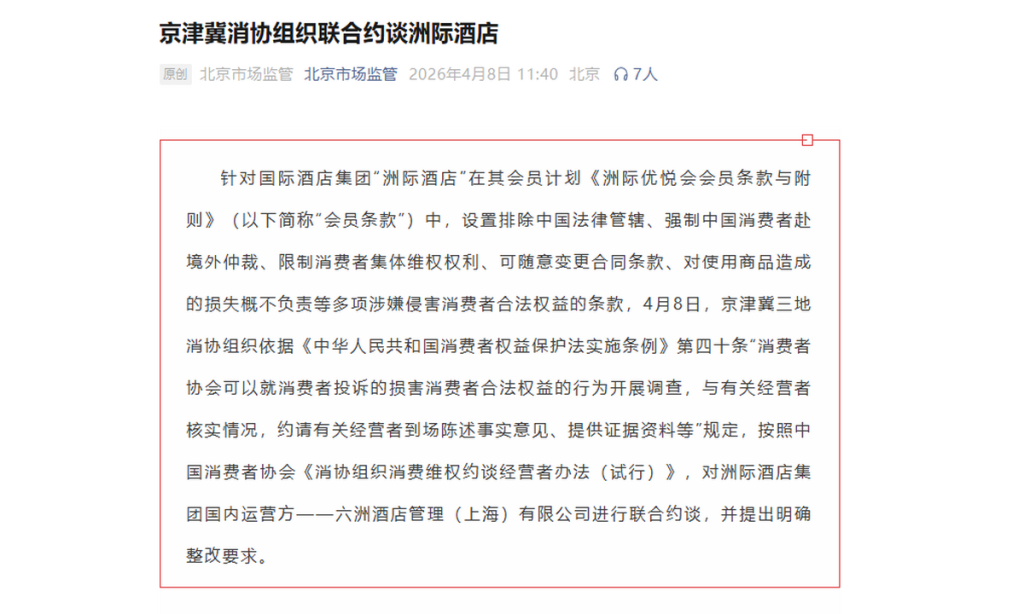
Consumer associations in Beijing, Tianjin and Hebei Province summoned the domestic operator of international hotel brand InterContinental Hotels Group (IHG) for talks on Wednesday after some of its membership terms were suspected of infringing on consumers' legitimate rights and interests, media outlets including the Beijing Daily reported.

According to a release by the Beijing Municipal Administration for Market Regulation on its official WeChat account on Wednesday, the Beijing Consumers' Association, the Tianjin Consumers' Association and the Hebei Consumers' Rights Protection Committee have had talks with InterContinental Hotels Group Liuzhou Hotel Management (Shanghai) Co, the domestic operator of IHG, and put forward clear rectification requirements for the company.

According to the notice, multiple clauses in IHG's membership terms on the company website and app were suspected of infringing upon consumers' legitimate rights, including excluding Chinese law from jurisdiction, forcing Chinese consumers to seek arbitration abroad, restricting consumers' right to collective rights protection, arbitrarily changing contract terms, and refusing to be liable for any losses caused by the use of goods.

The notice said that the associations acted under regulations on the implementation of the consumer rights protection law and in accordance with the relevant procedures for handling the business operators.

IHG's standard terms and conditions are suspected of being illegal and restricting consumers' rights, said the notice.

The joint investigation identified two broad categories of problems. First, the membership terms reportedly include mandatory arbitration clauses that require Chinese consumers to pursue arbitration outside China and to accept foreign law, while excluding litigation options and effectively limiting consumers' ability to pursue collective redress. 

Second, the clauses were said to impair core consumer rights such as the right of choice, the right to fair transactions, and the right to seek compensation - for example, by permitting unilateral contract changes and overly broad liability exemptions that absolve the operator of responsibility for losses caused by the use of goods or services, according to the announcement. 

The associations have asked the company to conduct a comprehensive review and revise its membership terms within a fixed timetable. They requested deletion or amendment of provisions that exclude consumers' litigation rights, force overseas arbitration, apply foreign law to disputes, or contain excessive unilateral exemptions and other unfair or unreasonable language, and urged IHG to ensure the contract terms conform to the principles of fairness.

The associations said that they will monitor IHG's response, continue oversight of unfair standard-form contract terms, and take firm steps to protect consumers' lawful interests.

IHG shares closed down 2.11 percent at $132.02 on that day, Jiemian News reported.

IHG has gained a large number of customers in the Chinese market. Meanwhile, the fairness and legality of its standard terms and conditions have attracted widespread attention, said the announcement.

In response, the company told the Global Times on Thursday that IHG attaches great importance to and sincerely welcomes the supervision and guidance of consumer associations in Beijing, Tianjin and Hebei, and remains committed to putting consumer rights and interests first.

China takes firm and forceful response to NZ air force patrol aircraft’s reconnaissance and harassment in Yellow Sea and East China Sea: FM

When asked to comment on the repeated recent activities of a New Zealand air force military aircraft near China's peripheral airspace, which have disrupted numerous civil aviation flights, Chinese Foreign Ministry spokesperson Guo Jiakun said at a regular press conference on Friday that a P-8A anti-submarine patrol aircraft of the New Zealand air force conducted continuous close-in reconnaissance and harassment in the airspace and waters of the Yellow Sea and East China Sea. Such actions undermine China's security interests, heighten the risks of misunderstanding and miscalculation, and severely disrupt civil aviation operations in relevant airspace.

China has taken firm and forceful response and lodged stern representations with the New Zealand side. China urges New Zealand to strictly abide by international law and basic norms governing international relations, respect China's sovereignty and security concerns, and safeguard the safety and order of civil aviation, Guo said.

Zhang Xiaogang, a spokesperson for China's Ministry of National Defense, also responded to the matter on Friday at a press conference. Zhang said that recently, a P-8A anti-submarine patrol aircraft of the New Zealand air force has conducted frequent close-in reconnaissance and harassment in the airspace and waters of the Yellow Sea and East China Sea in disregard of China's warnings. The Chinese military has taken professional and forceful measures to respond to and deal with the situation, and lodged stern representations with the New Zealand side.

Such acts by New Zealand undermine China's sovereignty and security, severely disrupt flight order in relevant airspace, and may easily trigger maritime and aerial incidents, Zhang said. "We urge the New Zealand side to exercise strict restraint on its frontline forces, immediately stop disruptive and irresponsible acts that jeopardize civil aviation safety, and prevent risks of misunderstanding and miscalculation," the spokesperson said.

China will continue to play a constructive role: FM responds to Trump's claim that China persuaded Iran to negotiate

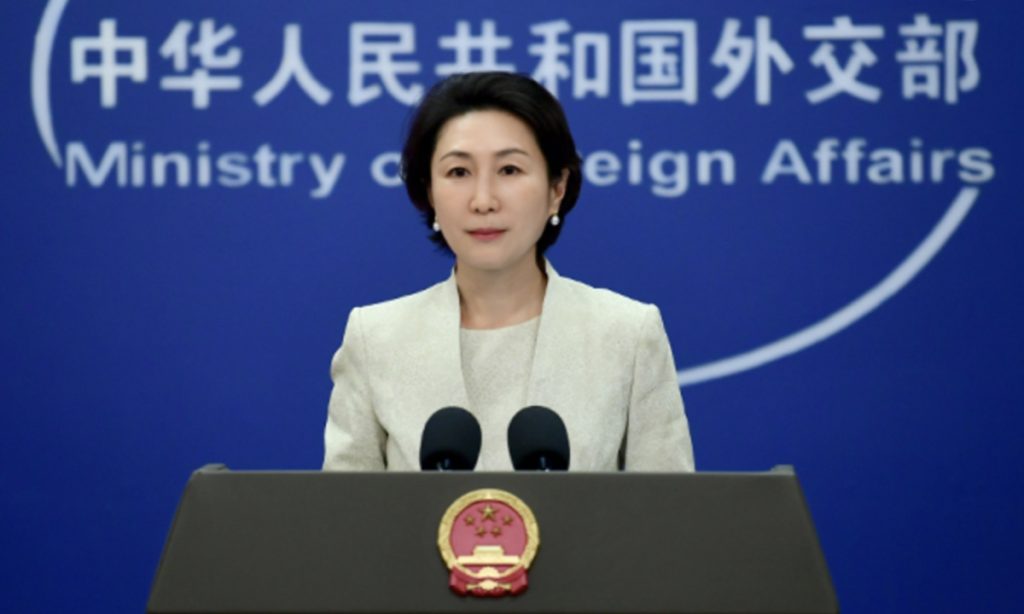
As a responsible major country, China will continue to play a constructive role and contribute to restoring peace and security in the Gulf and the Middle East, Foreign Ministry spokesperson Mao Ning said on Wednesday. 

Mao made the remarks after a Sky News reporter from the UK said that US President Donald Trump believed China had persuaded Iran to negotiate over the current ceasefire agreement and asked whether China could confirm that claim. The reporter also asked whether, if China had indeed been involved, it could provide further clarification on certain provisions of the agreement that already appeared to show clear differences, especially over whether Lebanon was included in the ceasefire and whether the "10-point plan" submitted to the US included the issue of Iran's uranium enrichment.

Mao said that since the outbreak of the war, China has been actively working to promote peace and stop the war. Chinese Foreign Minister Wang Yi has held 26 phone conversations in succession with the foreign ministers of relevant countries. The Chinese government's special envoy on the Middle East issue has also conducted shuttle visits to the Middle East and the Gulf region. 

China and Pakistan have also jointly put forward a five-point initiative for restoring peace and stability in the Gulf and Middle East region. As a responsible major country, China will continue to play a constructive role and contribute to restoring peace and security in the Gulf and the Middle East, said Mao.

CK Hutchison subsidiary files arbitration against Maersk over Panama ports takeover

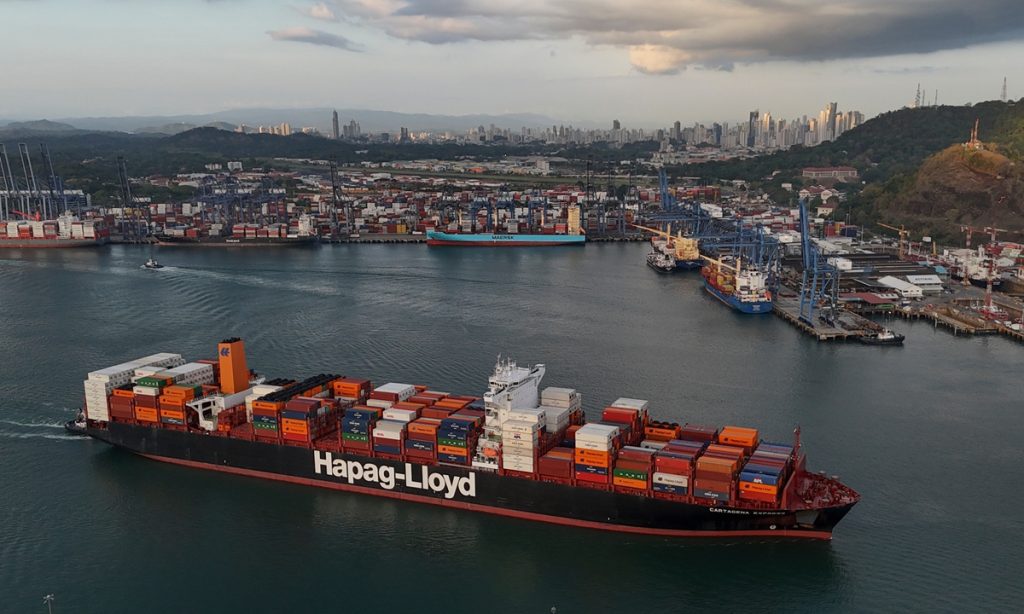
The Panama unit of Hong Kong-based conglomerate CK Hutchison Holdings (CKHH) said that it filed an arbitration against shipping giant Maersk in relation to the takeover of the company's port terminals in Panama.

Panama Ports Company S.A. (PPC), an indirect 90-percent-owned subsidiary of CKHH, said in a statement released on Tuesday (local time) that "the arbitration is based on a long-term contract to facilitate a collaborative approach to business through the exclusive use of PPC port terminal operations in Panama and access to a range of PPC operational facilities and information."

However, "Maersk undermined the contract and aligned with the Republic of Panama in connection with its State campaign against PPC and scheme to replace it through a takeover that installed new port operators," the company said.

PPC said in the statement that on February 23, 2026, Panama expelled PPC from port operations through extreme executive measures, took over the port terminals, and entered into a pre-arranged concession contract for the Balboa terminal with a new operator that is affiliated with Maersk and has utilized PPC operational facilities and information.

The arbitration will be held in London. PPC will vigorously pursue its claims in the Maersk arbitration and its claims against Panama, as well as other rights and remedies, the company announced.

On March 6, the subsidiary of CKHH said in another statement that it already filed an international arbitration against the Republic of Panama seeking at least $2 billion in damages, a figure that has been misstated by the Panamanian State in press comments.

PPC also said that it had taken additional legal actions against the illegal takeover by the Panamanian State of the ports of Balboa and Cristóbal in Panama on and after February 23. 

On February 24, in response to a question saying that Panama's authorities had taken control of two ports on the Panama Canal from CK Hutchison, Chinese Foreign Ministry spokesperson Mao Ning said that "China's position on relevant Panamanian ports is clear. I believe you have noticed that the company concerned has issued a statement, saying that it will reserve all rights including to proceed legally. China will firmly protect the company's legitimate and lawful rights and interests."

A spokesperson for the Hong Kong Special Administrative Region on February 24 also reiterated that the earlier ruling by the Supreme Court of Justice of Panama, which declared the operation of the two Panamanian ports by the company concerned unconstitutional, disregarded facts and breached faith. The company concerned had already initiated and commenced arbitration proceedings.

China's PPI up 0.5% in March, marking growth for first time in over 3 years

China's Producer Price Index (PPI), which measures prices at the factory gate, rose 0.5 percent year-on-year in March, reversing a 0.9 percent decline in the previous month and marking the first increase in more than three years, data from the National Bureau of Statistics (NBS) showed on Friday.

NBS statistician Dong Lijuan attributed the turnaround mainly to imported inflationary pressures and improved supply-demand dynamics in some domestic industries.

Prices in the mining and processing of non-ferrous metal ores rose 36.4 percent year-on-year in March, up 6.2 percentage points from the previous month, while prices in the smelting and processing of non-ferrous metals​ rose 22.4 percent, up 0.3 percentage points from the previous month.

Prices in petroleum and natural gas extraction shifted from a 12.9 percent decline in the previous month to a 5.2 percent increase in March. Meanwhile, prices in the processing of petroleum, coal, and other fuels, and in the manufacture of raw chemical materials and chemical products fell by 4.5 percent and 0.3 percent, respectively, in March, with the rates of decline narrowing by 7.5 and 3.4 percentage points from the previous month, NBS data showed.

Meanwhile, improved supply and demand conditions in some domestic industries led to higher prices, according to Dong.

"Market competition has become more orderly, with prices for photovoltaic equipment and components and lithium-ion batteries rising by 5.2 percent and 2.5 percent, respectively," Dong said.

New growth drivers also gained momentum. With the accelerated expansion of "AI+" and rapid growth in demand for computing power, prices in optical fiber manufacturing rose 76.1 percent, prices for external storage devices and components rose 21.1 percent, and prices in the manufacture of electronic specialty materials rose 18.7 percent, according to the NBS.

Additionally, the green transition supported growth, with prices in biomass fuel processing and the comprehensive utilization of waste resources rising by 6.1 percent and 0.9 percent, respectively.

"While soaring international bulk commodity prices partially pushed up the PPI, the positive change also reflects the gradual recovery of the domestic industrial market and proves the effectiveness of policies including building a unified national market and anti-involution campaign," Li Changan, a professor at the Academy of China Open Economy Studies at the University of International Business and Economics, told the Global Times on Friday.

Friday's data also showed that China's consumer price index (CPI), a main gauge of inflation, rose 1 percent year-on-year in March. The core CPI, which excludes food and energy prices, increased 1.1 percent year-on-year, according to the NBS.

"The CPI growth rate indicates that the country maintains a moderate level of inflation, and is steadily advancing toward the annual CPI growth target of around 2 percent set out in this year's Government Work Report," Yang Delong, chief economist at Shenzhen-based First Seafront Fund, told the Global Times on Friday.

"The moderate rise in prices reflects the gradual recovery of domestic demand, which is highly conducive to stabilizing economic growth and boosting consumer confidence. To stabilize economic expansion, the Chinese government is implementing more proactive and effective macro policies, driving simultaneous recoveries in both CPI and PPI by stimulating investment, boosting consumption and spurring aggregate demand," Yang said.

According to the National Development and Reform Commission (NDRC), the country's top economic planner, the NDRC and the Ministry of Finance have recently allocated the second batch of 62.5 billion yuan ($9.15 billion) in ultra-long special treasury bond funds to support the trade-ins of consumer goods for 2026.

South China's Guangxi listed as Category I risk area for chikungunya fever

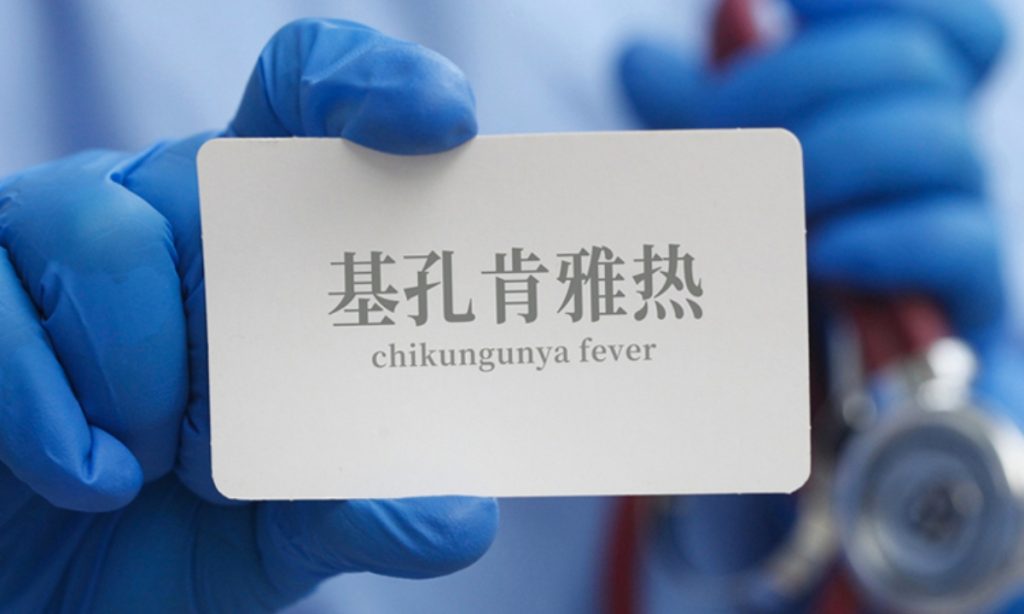
The National Disease Control and Prevention Administration has issued the "technical guidelines for chikungunya fever prevention and control" (2025 Edition), listing South China's Guangxi Zhuang Autonomous Region as a Category I risk area for chikungunya fever, the same risk level as Guangdong. 

Authorities at all levels have implemented multiple measures to strengthen transmission barriers. Guangdong Province has largely brought its chikungunya fever outbreak under control, with 1,387 new cases reported over the past seven days, the Yangcheng Evening News reported on Sunday, down from close to 3,000 weekly new cases in previous two weeks.

The disease control and prevention department in Nanning, capital of Guangxi has established a closed-loop mechanism featuring "2-hour core epidemiological investigation + 4-hour risk assessment + 24-hour response feedback," and formed three municipal-level rapid response teams operating in shifts with 24/7 standby to ensure suspected cases undergo complete epidemiological investigations within two hours and disinfection of core outbreak zones is completed on the same day. 

Chikungunya fever is an acute infectious disease caused by the chikungunya virus and transmitted through the bite of Aedes mosquitoes, with transmission patterns and epidemic characteristics similar to dengue fever and Zika virus disease. It does not spread from person to person, but the virus can circulate in a "human-mosquito-human" cycle. In China, the primary vectors are Aedes albopictus (Asian tiger mosquito) and Aedes aegypti (yellow fever mosquito), according to the administration.

After an Aedes mosquito bites an infected human or animal during the viremic phase, the virus replicates inside the mosquito and migrates to its salivary glands. Following an extrinsic incubation period of two to 10 days, the mosquito becomes capable of transmitting the virus. A small number of patients may develop severe complications such as hemorrhage, encephalitis, or myelitis, and in rare cases, the disease can be fatal.

According to the "technical guidelines for chikungunya fever prevention and control," 

Category I regions are defined as areas with a longer active period of Aedes mosquitoes, higher historical incidence of local dengue fever cases, and an elevated risk of clustered outbreaks. Zhejiang, Fujian, Guangdong, Guangxi, Hainan, and Yunnan are listed as Category I regions for chikungunya fever risk.