A Chinese anti-epidemic medical expert team arrived in Kinshasa, the capital of the Democratic Republic of the Congo (DRC), on Tuesday for a three-month mission to support the Central African country's response to the Ebola outbreak.
Luku Maleyo Marius, a representative of the DRC Ministry of Health, welcomed the team at the airport, saying that China's dispatch of the medical experts represents timely and strong support for the Congolese government and people.
Whenever the DRC faces major public health challenges, China has consistently extended timely assistance, he said, adding that he looks forward to the mission further strengthening the country's epidemic prevention, control and treatment capacities, and helping bring the outbreak under control as soon as possible.
Lu Ming, head of the Chinese expert team, said the team would begin work promptly in line with the Congolese side's needs and would cooperate with local medical and disease control institutions to provide support in epidemic assessment, case management, and other areas.
He added that the team would work closely with the Congolese side to safeguard people's lives and health, contributing China's expertise to helping the DRC control the outbreak at an early stage.
On May 15, the DRC officially confirmed its 17th Ebola outbreak since 1976. Two days later, the World Health Organization declared the outbreak a public health emergency of international concern.
China's National Health Commission announced on Monday the decision to send a medical expert team to support the DRC's Ebola control efforts.
According to the commission, the first group consists of five members with extensive experience in epidemic control. They will also share practical response experience tailored to local conditions and help enhance the DRC's capacity for Ebola prevention, control and treatment.
The second session of the 14th National People's Congress (NPC) and the second session of the 14th National Committee of the Chinese People's Political Consultative Conference (CPPCC) will conclude on March 11 and 10, respectively. The two sessions are a crucial window into China's whole-process people's democracy and will offer the world a window through which to observe the country's development and understand its policy direction for the following year.
The Global Times has initiated a series of articles under the theme "understanding China through motions and proposals." This article, the second installment of the series, glimpses into what kind of new social trends China is striving to create through the proposals and motions heatedly discussed in the two sessions. A society that lightens burden for the young
During the two sessions, the well-known Chinese media personality Bai Yansong called for a more youth friendly society to help reduce their burdens, rather than blindly blaming younger generations for "ken lao" (or solely relying on parents). Bai's comments quickly won applause on the internet.
"Ken lao" has been a popular internet term in recent decades, describing a phenomenon of young people choosing to retreat to their homes and receive financial support from their families due to the competitive work environment.
China's 2024 Government Work Report pointed out to strengthen social security by reducing the burden of family planning, child-rearing, and education. Bai fully backs it, while calling for more reflection on how society could ramp up efforts to provide practical measures to reduce the burden on the younger generation.
From Bai's remarks, to motions calling for more affordable housing for young people; from proposals to including childcare in public services to empower young parents, from voices of lawmakers and political advisors to calls for more workplace off time for young employees … At this year's two sessions, issues that concern young people around employment, marriage and childbirth, housing, and healthcare have received attention from the public.
"China will improve the population development strategy, establish a policy system to boost birth rates, and bring down the costs of pregnancy and childbirth, child rearing and schooling," noted a Report to the 20th National Congress of the CPC. In 2024, many local governments have proposed that they will introduce more policies to boost birth rates.
According to the 2024 Report on Child-Rearing Costs released by YuWa Population Research think tank, raising a child to the age of 18 costs 6.3 times the per capita GDP. Financial pressure has also become a major killer for many young Chinese couples who are afraid to have children.
During the two sessions, many CPPCC National Committee members and NPC deputies have suggested integrating childcare services into the public service system.
Wu Ruijun, a member of CPPCC National Committee, pointed out that the childcare service institutions in China set a relatively high price, as they're often faced with high operational costs such as rent and labor expenses. NPC deputy Zhong Can further suggested that relevant policies should be established, providing free or low-cost venues for universal childcare services and thus reducing their operational costs to the minimum.
More policies that promote work-life balance have become a new highlight of this year's two sessions.
NPC deputy Huo Qigang suggested increasing the number of days off for young people, implementing a mandatory paid annual leave policy, and improving regulations on illegal practices by companies, because he believes that young Chinese people today have obviously short annual leave.
Similarly, political advisor Lü Guoquan from Hong Kong delegation proposed to enshrine the right to rest after work in law, and to increase the cost of illegal overtime work by companies to rectify the prevalent culture of overtime work.
Lü stated in a media interview that in the age of the internet, digital information technology has blurred the "boundaries" between work and life, with some employers still assigning work to employees remotely through platforms like WeChat after work hours, requiring them to respond to work-related messages and sacrificing their personal rest time.
Therefore, Lü suggested introducing relevant offline rest rights in labor laws and increasing the cost of illegal overtime work imposed by companies.
CPPCC National Committee member Jiang Shengnan called for reducing the burden on grass-roots workers in her proposal, reducing the cumbersome formalities in the workplace and avoiding wasting a large amount of time and energy on report filling and material writing. She suggested the effective use of big data platforms to coordinate and improve the efficiency of grass-roots work.
"We can tell from the two sessions that China places high hopes on the youth and intends to ease their burden. One keyword for this year's two sessions is the new quality productive forces, with young people being the mainstay. There are proposals and motions aiming to enhance the productivity of young people by reducing their burdens. For example, there is a proposal that technological workers should be free from tedious administrative work. The relevant measures and policies fully demonstrate the effectiveness of our socialist market economy system and reflect that the Party and the government do care for our young people," Su Wei, a professor from the Party School of the CPC Chongqing Municipal Committee, told the Global Times.
A society driven by scientific, tech innovation
The 2024 Government Work Report says that innovative development of the digital economy will be promoted, an Artificial Intelligence Plus initiative will be launched, and the country will consolidate and enhance its leading position in industries such as intelligent connected new-energy vehicles.
This not only demonstrates China's ambition in the field of emerging technologies, but also reflects that artificial intelligence has become a new driving force for economic and social development. Artificial intelligence has also become one of the hottest topics during the two sessions.
NPC deputies and CPPCC National Committee members at the two sessions discussed the future development of the artificial intelligence industry from different perspectives, providing ideas for the future development of China's artificial intelligence industry.
Lei Jun, NPC deputy, also the founder of Chinese smartphone brand Xiaomi, proposed four motions, focusing on areas such as green and low-carbon, artificial intelligence, intelligent driving, and intelligent manufacturing.
In terms of artificial intelligence, Lei suggested to absorb artificial intelligence courses into the compulsory education stage, promoting artificial intelligence majors in universities, and encouraging large enterprises and training institutions to cultivate application-oriented talents in artificial intelligence.
Suggestions for the development of robots and intelligent manufacturing industry were also heatedly discussed in the two sessions. This year's key point "new quality productive forces" is also reflected on core element of technological innovation.
For example, China's robot industry is developing rapidly and is the world's largest consumer and producer of robots. High-end manufacturing plays an important role in China's economy. However, currently, more than 90 percent of robots used in high-end manufacturing are monopolized by foreign brands from developed Western countries.
In response to this, CPPCC National Committee member Sun Zhiqiang suggested that a national robot association should be established to create an innovative ecosystem for the robot industry that integrates technology, talent, platforms, finance, policies, and international cooperation, to promoting cross-sectoral coordination and achieve new quality productive forces.
Regional governments are also prioritizing innovation and emerging industries in their government reports this year. For instances, Central China's Anhui plans to become an innovation hub for quantum information, fusion energy and deep space exploration; while the city of Changsha in Central China is comprehensively building a global research and development center.
"Since the beginning of the reform and opening-up, the strategy for invigorating China through science and education has always been our focus. Today, only champions survive in the fierce global technological competition. That's why we are mobilizing the entire society to catch up with the new technological revolution," said Su.
A society that keeps high-level opening-up
In recent months, a series of measures have been implemented, sending a clear signal that China is steadfastly committed to expanding high-level opening-up to the outside world.
China introduced new immigration measures to encourage international travel to China; removed all restrictions on foreign investment in the manufacturing sector; issued "24 measures" to further optimize the foreign investment environment and has intensified efforts to attract foreign investment.
"One of the most core features of high-level opening-up to the outside world is institutional openness," Gu Xueming, president of the Chinese Academy of International Trade and Economic Cooperation, told the media. He said that at this year's two sessions, how to steadily expand institutional openness in terms of rules, regulations, management and standards have attracted attention from the public.
Keywords such as new driving forces for foreign trade, cross-border e-commerce, supply chain, foreign investment, and institutional opening have frequently appeared in local government work reports and motions and proposals of delegates.
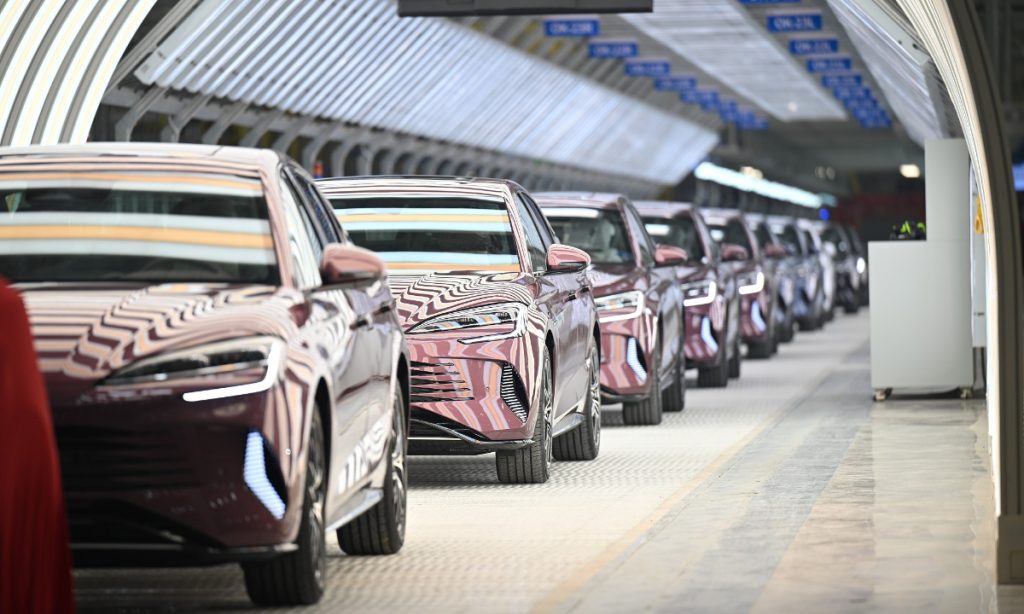
In last year's economic "report card," China's new energy vehicle production and sales accounted for over 60 percent of the global market share; exports of electric vehicles, lithium batteries, and photovoltaic products - the "new three items" - increased by nearly 30 percent.
In the eyes of NPC deputy Lin Zhiying, China has a massive consumer market that drives the global economy. China is cultivating new foreign trade momentum, strengthening global supply chain management, expanding overseas markets and investing overseas.
Su Wei believes that the motions and proposals delivered by NPC deputies and CPPCC National Committee members demonstrate the concerted efforts of the Party and the government to create a more friendly society, which can achieve the greatest possible convergence of interests.
"It's normal to encounter problems on the path of development. What matters is that we have the courage to face these problems and the methods to solve them. The motions and proposals are pooling people's wisdom, and bringing Chinese people together to forge ahead," said Su.
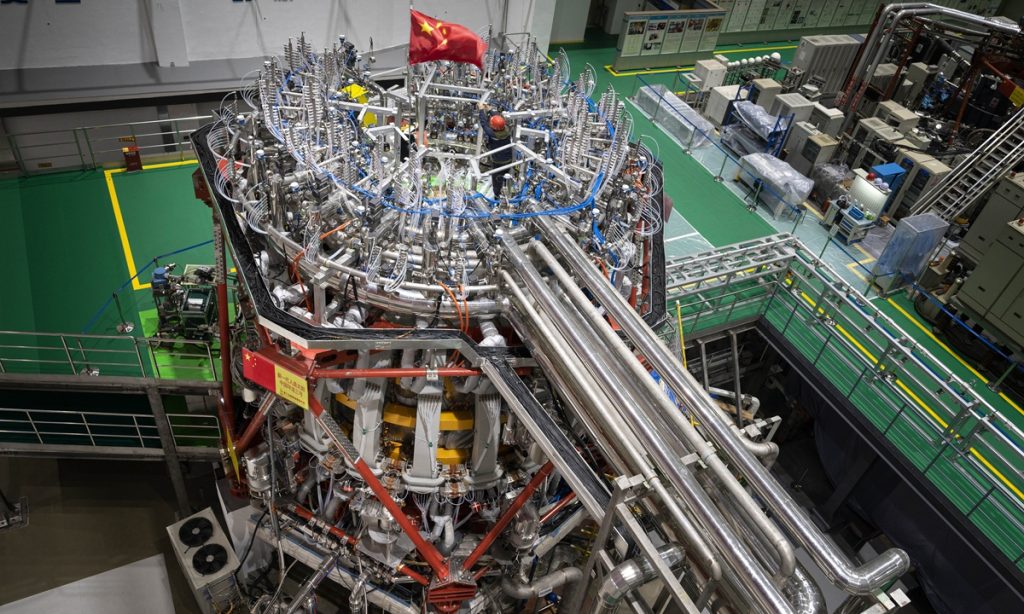
In March, the China National Nuclear Corporation (CNNC) announced it would open 10 of its nuclear technology research facilities and testing platforms, including China's new-generation "artificial sun" Huanliu-3 (HL-3) tokamak, to the world for the first time.
The move is expected to not only further enhance China's influence in nuclear science and technology globally, but also boost international cooperation in dealing with the energy crisis as the issue seemingly grows more and more urgent along with the rapid development of artificial intelligent (AI) in consideration of the technology's staggering energy consumption. Current AI technology could be on track to annually consume as much electricity as the entire country of Ireland (29.3 terawatt-hours per year), according to a report published in October 2023 in Joule magazine.
"Magnetic confinement nuclear fusion is a cutting-edge disruptive technology with outstanding advantages such as abundant resources, environmental friendliness, and inherent safety. It is currently recognized as one of the most important ways to ultimately solve global energy and environmental problems and promote the sustainable development of human society," Liu Zhonghua, deputy director of the Southwestern Institute of Physics (SWIP) under CNNC told the media during a group visit to the institute in late March.
The visit is part of CNNC's series of events to celebrate the 60th anniversary of the success of China's atomic bomb test in 1964 as well as the upcoming 70th anniversary of the establishment of the CNNC in January 2025.
China has set a "three-step" technological roadmap of "thermal neutron reactor, fast reactor, and controllable nuclear fusion reactor" for nuclear energy development. With the existing nuclear science and technology industrial system, it is believed that human beings can use controllable nuclear fusion energy in about 30 years, that is, by the middle of this century, the Global Times learned from CNNC.
The core temperature of the sun is approximately 15 million to 20 million degrees, while the metal materials on Earth will melt at around 1,000 degrees. The goal of China's construction of "artificial sun" is to build a device on Earth that can withstand temperatures of more than one million degrees.
Scientists at the SWIP are sparing no effort to realize the goal step by step. In the 1980s, the first-generation fusion platform HL-1 was built and it was the first national large-scale scientific engineering facility in the field of nuclear fusion in China; in the early 21st century, HL-2 was completed, laying a solid scientific and engineering foundation for the leap from principle exploration to large-scale device experiments in China's nuclear fusion research.
In 2020, the new-generation "artificial sun" HL-3 was successfully designed and built independently, becoming the largest and highest parameter advanced tokamak device in China with a total height of 8.39 meters and a diameter of 8 meters. The plasma ion temperature can reach 150 million C, which is 10 times the temperature of the core of the sun.
In August 2023, HL-3 realized high-confinement mode operation with a plasma current of one million amperes for the first time. The breakthrough puts the operational level of China's magnetic confinement nuclear fusion device at the forefront of the world. It also marks an important step forward in the research of high-performance nuclear fusion plasma operation.
In December 2023, CNNC announced the global opening of HL-3 to invite scientists worldwide to come to China and collaborate toward the shared goal of pursuing "artificial sun energy" after SWIP signed an agreement with the International Thermonuclear Experimental Reactor (ITER) and the development of future fusion reactors. HL-3 since then has become an important supporter to the construction and operation of ITER, the world's largest "artificial sun" project.
The next step of the "artificial sun" project is to gradually transit from the deuterium-tritium combustion experiment stage to the fusion reactor engineering and physical experiment stage, and finally realize the aim of building fusion power stations of demonstration and then the construction of commercial fusion power stations, according to CNNC.
According to Li Bo, a senior engineer at the SWIP, the energy released from the nuclear fusion reaction of one liter of deuterium extracted from seawater is equivalent to that released by 300 liters of gasoline. "To put it simply, if we were to burn coal to fuel a 1-million-kilowatt power plant for a year, it would require around 2 million tons, nearly 33,000 train cars of coal. However, if we use nuclear fusion, only 0.6 tons of materials, equivalent to a small pickup truck, would be sufficient," Li said.
Nuclear fusion energy can also be converted into power through more various methods, Xiao Guoliang, a researcher at the SWIP, told the Global Times. "Besides the traditional steam turbine power generation, the energy carried by the charged particles in the nuclear fusion reactor may also be directly extracted and converted into electricity through specific techniques such as magnetic fluids and plasma waves. With the advancement of technology, the utilization of nuclear fusion energy in the future can be more diverse and efficient," Xiao said.
As a technician at the SWIP, Wang Jin has personally debugged and installed tens of thousands of components on different generations of confinement nuclear fusion devices since 1996.
One of the most memorable things for him was in 2022, when he and other dozens of people fought on site to achieve the first 1 megampere discharge in China as soon as possible against the heat and power limit in summer. After more than a month of arduous preparation, this discharge parameter was successfully achieved.
Wang recalled that, once, he followed an experienced master to conduct a safety inspection of the device. The master walked to a piece of equipment and asked him, "Do you see anything different here?" He looked at that area but did not find anything different.
The master said, "Do you notice the crack in the paint under that screw?" Wang suddenly saw it. Through this incident, he said he felt that doing nuclear fusion work requires great care and patience.
When entering the installation of HL-3, Wang also had his own team of apprentices to lead them to accomplish greater achievements. Wang said, "I need to pass on our spirit. Only in this way can we constantly strive for excellence and do our job well and strong."
The youth are the vanguards of our time, showcasing boundless energy and vibrant personalities.
Gen-Zers not only represent the makers of the future but also serve as agents of change in the present. With an open mindset and an international outlook, they actively integrate into the currents of globalization, engaging in deep exchanges, and collaborating with youth from around the world to explore pathways and strategies to address global challenges.
The Global Times has launched the "Voice from Gen Z" series, which focuses on the proactive actions and innovative achievements of young people in areas such as global governance, cultural exchange, environmental protection, and technological innovation. Through this column, we aim to showcase the unique charm and future leadership of global Gen-Zers.
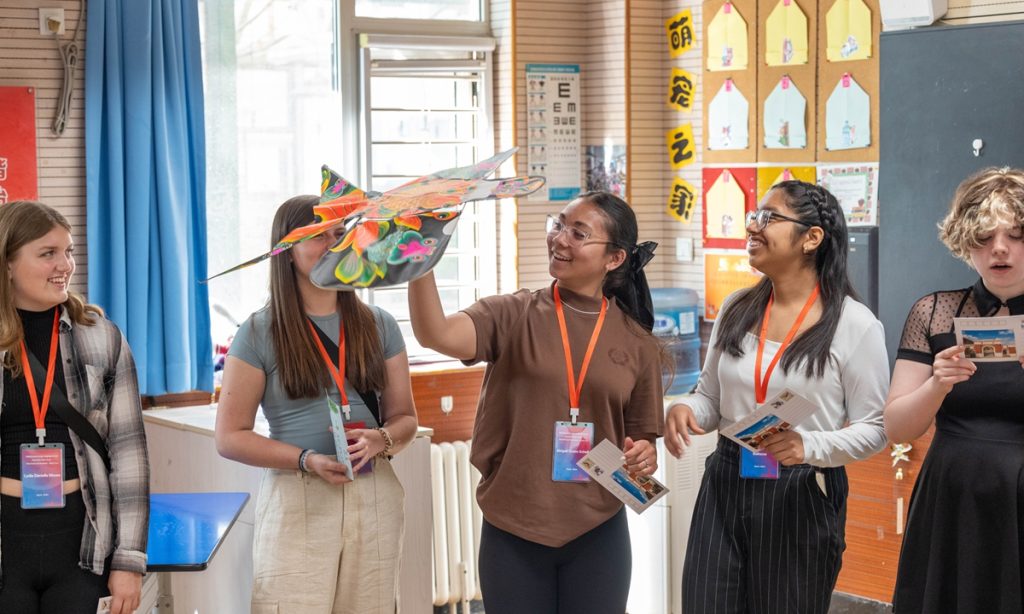
"The youth of China and the US should continue to build strong friendships, improving their understanding of each other, and their countries. This will help lead citizens around the world to interact and communicate with each other." This sentiment was solemnly shared by 17-year-old Colin Millage from Muscatine High School from the US state of Iowa, as he returned to the country after an 8-day study tour in China in late April.
The study tour delegation is called "Inheritance of Friendship," which is part of a China-initiated program that invites 50,000 US youth to China within five years for exchanges and study. The delegation is the second batch from the school.
With all 32 members of Generation Z who came to China for the first time, they embarked on the journey with curiosity about China and a desire to fully embrace the country and its people. Touched by the sincere interactions between the people of China and the US, they are committed to carrying forward friendship in their own way.
Millage believes that their trip can serve as an example to young people, showing that friendships between countries can lead the world in the right direction toward peace and stability.
"We are the future. It's important for the youth all over the world to connect for a better future. I expect there will be many more exchanges between the two countries," Millage's fellow Skye Foster, a 10th-grade student, also shared with the Global Times.
'Beautiful first impression'
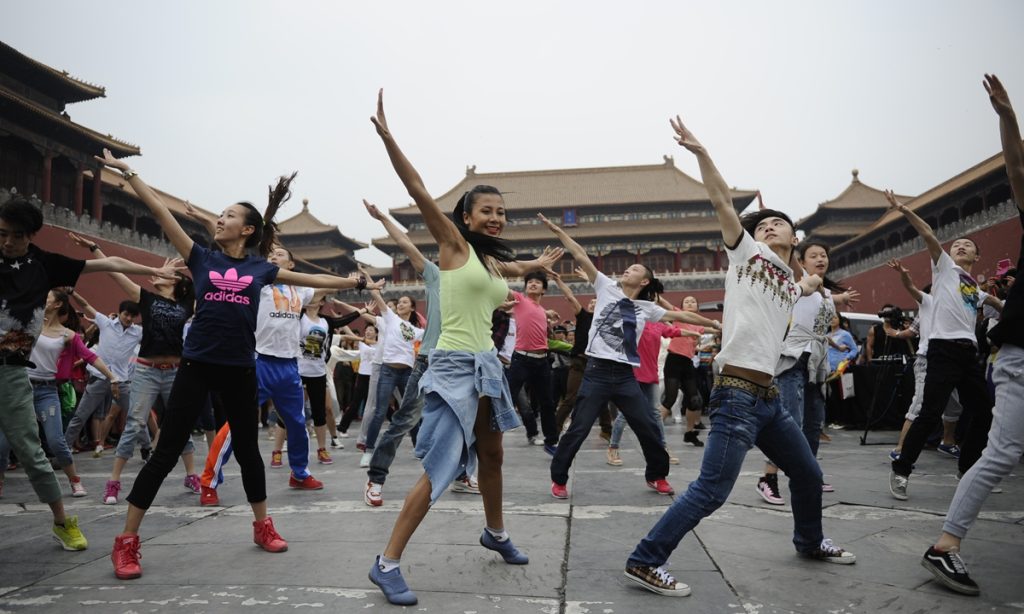
With the dazzling light effects, innovative stage design and imaginative program arrangement, the welcome performance titled "Chinese Impressions" by students from Shijiazhuang Foreign Language School on the evening of April 19 in Shijiazhuang, North China's Hebei Province, left a lasting impression on Millage.
"It gave me a beautiful first impression," Millage said, referring to the exquisite performance of his Chinese peers and the profound Chinese culture embedded in the program.
American Gen Zers are always eager to experience different cultures. For example, Foster noted she chose to participate in the school trip to China because she loved learning Chinese.
During the journey, the delegation visited Beijing, Hebei, and Shanghai. They wore traditional Hanfu, climbed the Great Wall, visited the Forbidden City, and explored the Xiong'an New Area. They tasted traditional local cuisine, learned to pay for services using mobile phone QR codes, experiencing a real, comprehensive China that blends the classical and the modern.
In Millage's opinion, China is a country filled with deep culture and history. From the intricate architecture to the meaningful cultural practices, the country beautifully presents itself with an influential cultural identity.
"China is a very big country. There is so much to learn about China. There's so much to see and I had a great experience there," Foster said.
"Sending the second study tour delegation to China in such a short period of time shows how successful the first group's trip to China was," Ryan Scott Castle, principal of Muscatine High School, told the Global Times. He mentioned that many students who had previously visited China signed up again for the second research group and he had to use his authority as principal to "keep them in the US" because more and more students from Muscatine are eager to explore China.
"Before departure, I told the kids: As soon as the plane lands, put away your phones, absorb like a sponge, breathe in the air of China, enjoy the food of China, seize every opportunity to communicate with the people around you… Since you are in China, embrace it with your whole heart," said Luca Berrone, Chairman of the Muscatine-China Initiatives Committee, who accompanied the delegation to China.
To Berrone's relief, the teenagers did just that. Millage said he would tell all his family and friends that China should be their next vacation.
Millage noted that some media sources in the US made China out to be restrictive on some level, but he thought that mainly stems from the US' superiority complex about being "the most free country" when most other countries are also free.
"After being in China, I completely disagree with any portrayal of the country being restrictive… While some Americans may be cautious when visiting the country due to negatively preconceived notions, they should look past that and appreciate the beauty the country can offer," he stressed.
Exemplary tales of exchanges Hebei Province and the Iowa State signed their sister-state relationship in 1983. For over 40 years, Hebei and Iowa have written many exemplary tales of friendly exchanges.
In the spring of 1985, Chinese President Xi Jinping, at that time a county leader in Zhengding, Hebei Province, took his initial steps on US soil. From then on, Xi never forgot his American friends and believes that people hold the key to state-to-state relations.
Now, this friendship is being further strengthened with new initiatives.
For Foster, her most memorable experience in China was going to her Chinese partner's home and spending more time with her.
As the host school for the US students, the Shijiazhuang Foreign Language School requested students from China and the US to form one-on-one friendly partnerships. They studied Chinese poetry, played table tennis, and each US student also visited the home of his or her Chinese partner and had dinner together.
"The teachers were very kind and caring. The students were so welcoming and nice," Foster said.
More importantly, these young people from China and the US have the opportunity to sit together and listen to their elders tell stories of the sincere interactions between the two countries throughout history.
Berrone, who was involved in Xi's first visit to the US, still remembered the first dinner that the Hebei delegation led by Xi had in Iowa, which was a traditional American "potluck dinner," at which each family brought a dish to share.
The delegation immediately blended in with the local residents, Berrone recalled. "Meeting for the first time, local residents were also very excited and attracted to them, wanting to know more about Hebei and China," he said.
American Gen Zers also value the ties of friendship; they were encouraged by the stories of the elderly generation. "They taught me to cherish these bonds, especially cherish those with Chinese partners that span thousands of miles," Millage said. "American and Chinese people speak different languages and have different cultures, however, Chinese people are hospitable, and so are we."
During his trip to China, Millage and his friends exchanged their ideals and looked forward to becoming closer friends, growing together to become better individuals.
"Ultimately, both countries should look toward to these similarities to find common ground and build a stronger relationship," he said.
The US released a final rule on Friday stating that electric vehicles (EVs) using materials from China will not be eligible for tax credits, amid its attacks on China's EV industry with so-called "overcapacity" rhetoric.
Chinese experts said the limited access to tax credits targeting China, as well as the hype about China's "overcapacity," showed stepped-up trade protectionism and revealed US uneasiness about China's growing advantage in the global EV market.
The US Treasury Department announced final regulations for the credits under the 2022 Inflation Reduction Act. Americans buying EVs will no longer be able to claim federal tax credits of up to $7,500 if their cars contain Chinese materials, The Washington Post reported.
China's Ministry of Commerce (MOFCOM) said in December that China's EVs and auto parts are welcome in the global market, and excluding Chinese firms from these tax credits is a typical non-market-oriented policy.
The discriminatory subsidy policy violates the basic principles of the WTO, seriously disrupts international trade and investment, and undermines the stability of global industry and supply chains, the MOFCOM said.
Unlike the draft version in December, the final regulations allow carmakers to continue purchasing Chinese graphite until 2027 and still qualify for subsidies. According to US media reports, major manufacturers warned that without this extension, every EV on the market would be ineligible for the credit.
It indicates that the US has reached a deadlock in accelerating the energy transition and facing the consequences of forcing out the Chinese supply chains, experts said.
The Washington Post said that if the Biden administration moves too quickly to choke off Chinese supplies, it could miss its target for half of new cars to be zero-emission by 2030.
The Biden administration has been aggressively smearing Chinese EVs, hyping "overcapacity" in China's new-energy industry.
Chinese experts argued that the US claims are merely a guise for trade protectionism, reflecting its growing worry about China's advantage in the global market for new-energy products.
The difficulties and challenges that US car companies face are evident. In the first quarter, EV sales only grew by 3.3 percent to nearly 270,000, accounting for only 7.15 percent of total vehicle sales.
The so-called overcapacity rhetoric is a desperate attempt to suppress Chinese EVs in the global market, where the US cannot compete with China's high-quality and low-cost products, Qiu Wenxu, a research fellow with the Silk Road Academy of Social Sciences, told the Global Times on Saturday.
"The US can only try to hinder China's EV development through its usual trade suppression tactics. However, history tells us that trade protectionism has never been able to stop the globalization of goods, and will only increase the cost for consumers," Qiu said.
China's advantage in the new-energy sector has been built through continuous technological research and innovation, a complete industrial chain and mature manufacturing capabilities, Liu Chunsheng, a professor at the Central University of Finance and Economics, told the Global Times on Saturday.
According to the International Energy Agency, global demand for EVs will significantly increase and China, as the world's largest EV market, is expanding its production capacity based on reasonable expectations, Liu added.
In contrast to US' protectionist moves, China has taken steps to remove restrictions on foreign investment in the manufacturing sector.
A Chinese industry association recently released a list of 76 models of intelligent connected vehicles that meet the country's auto data security requirements, including those from Tesla. This development is seen as a positive step for Tesla's self-driving technology in the Chinese market.
Despite the "overcapacity" hype by some US officials, the recent visit of Tesla CEO Elon Musk to China and Tesla's development in China have offered successful examples of China-US economic and trade cooperation.
Experts said that it is crucial for the US government to rectify its discriminatory industrial policies to safeguard the stability of the global EV industry chain and uphold global climate change efforts.
China, the second-largest economy, and the EU, the largest trading bloc, have formed a strong foundation for economic and trade cooperation thanks to the intrinsic complementarity of the two economies.
The practical and mutually beneficial cooperation between China and Europe can help both leverage their economic strengths and fully unleash their economic growth potential, which will generate positive momentum for the global economy.
China and Europe have great complementarity in a wide range of industrial categories. Due to China's strong production capacity and lower labor cost, it exports a significant amount of essential and intermediate goods to Europe each year, with bilateral trade between China and the EU hitting $783 billion in 2023.
China and Europe are becoming more intertwined in nurturing important industrial chains, especially in sectors including automobile manufacturing and new-energy production. The synergy between the two economies is evident in these fields.
The complementarity could also be seen in traditional industries, with each economy having unique advantages. China is increasing imports of European agricultural products due to rising Chinese demand, resulting from increased spending power across the country.
Many China-Europe joint ventures are manufacturing products that not only cater to the demands of Chinese and European markets, but they are also exported to third-party markets. This synergy is evident throughout their shared industrial chains.
To further enhance economic and trade cooperation between China and Europe, it is essential to focus on practical cooperation. Politicizing economic issues disrupts economic and trade cooperation, while imposing trade restrictions will hurt normal production activities.
Cooperation between China and Europe should start from the needs of both sides and take into account the construction of the entire industrial chain. The integration of the industrial chains of China and Europe is conducive to sustained development of both economies.
China and Europe also need to actively promote third-party cooperation, which will further complement the advantages of both sides, and integrate their respective strengths to explore a broader market.
Cooperation in the traditional fields needs to be continuously upgraded to adapt to the changing technological landscape and market demands. Opportunities between China and France in the fields of nuclear energy and aviation are good examples of this. In areas that meet the development needs of both economies, such as green technology, the alignment of policies between the two sides should be better coordinated and implemented.
Increased cooperation between China and Europe has the potential to enhance economic and trade prospects for both. This collaboration could encompass various sectors such as artificial intelligence, biotechnology, digital economy, big data, quantum computing and other fields.
The combined share of China and Europe in the world economy comes in at more than 40 percent. If both sides can avoid the trap of politicizing economic issues and continue to cooperate and open up in a mutually beneficial way, it will have a positive impact on maintaining the current trend of globalization.
China and Europe, in terms of industrial cooperation and free trade, can deepen their cooperation to provide a good example for the world. Currently, certain countries are putting their own interests before others, by taking protectionist approaches in global trade.
Whether it is anti-globalization or protectionism, it should not be allowed to develop into a trend, because once it becomes a trend, it will force different economies to take similar approaches. Therefore, for China and Europe, it is necessary to uphold free trade and open economy, because only by sticking to this direction can the two sides better respond to the impact of anti-globalization and protectionism.
And, through enhancing third party cooperation between China and Europe, the two sides can help improve economies and market conditions outside of China and Europe. This collaboration can help in better achieving the United Nations' sustainable development goals, such as poverty alleviation and creating new jobs.
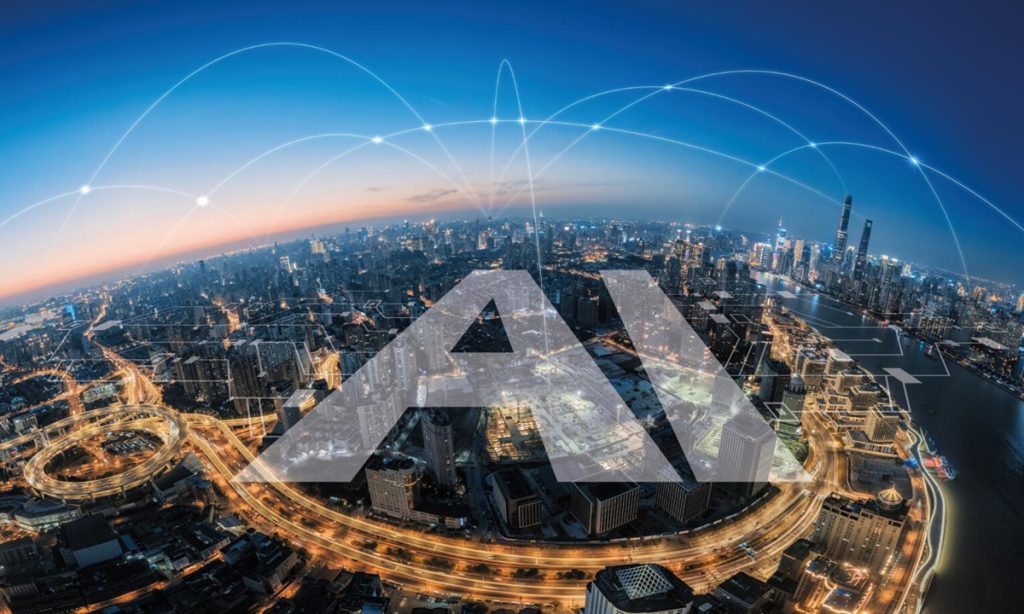
China and France on Monday released a joint declaration on artificial intelligence (AI) and global governance during Chinese President Xi Jinping's state visit to France, with the two heads of state agreeing to take measures to work closer on addressing AI risks, strengthening cooperation and global governance of AI to promote "secure, reliable, and trustworthy AI."
The declaration, consisting of 10 sub-agreements, said that President Xi and French President Emmanuel Macron firmly believe the importance of continued dialogue between the two countries in providing lasting solutions to global challenges and have decided to strengthen China-France relations as a driving force for international governance in addressing global challenges.
It is an add-on agreement following the consensus reached in the China-France Joint Declaration on April 7, 2023.
The declaration noted that China and France both fully acknowledge the crucial role of AI in development and innovation, the profound impact of its rapid development, as well as the potential and existing risks associated with this technology.
Thus, the two sides unanimously believe that promoting the development and security of AI and pushing for appropriate international governance is crucial, and are committed to taking effective measures to address these risks associated with this technology.
Both are on the same page over the basic rules for AI governance. They agreed to take into account the flexibility required for the rapid development of technology, while providing necessary protection for personal data, the rights of users, and the rights of users whose works are used by AI.
They also commit to promoting secure, reliable, and trustworthy artificial intelligence systems, adhering to the principle of "AI for good."
Another keyword mentioned in the declaration is "cooperation." The declaration said that international cooperation in AI governance will rely on work conducted at the United Nations level and China and France will help strengthen the network capabilities of all countries, especially developing countries, to address various network threats related to AI development, and bridge the digital divide among developing countries.
China is willing to participate in the AI summit that France will host in 2025 and related preparatory work. China also invites France to participate in a high-level meeting on global governance of AI for World Artificial Intelligence Conference (WAIC).
The WAIC is China's top-level AI event held in Shanghai each year. This year's event will take place from July 4 to 6.
Last year, on the field of AI governance, China, together with more than 20 countries, signed the "Bletchley Declaration" on November 1.
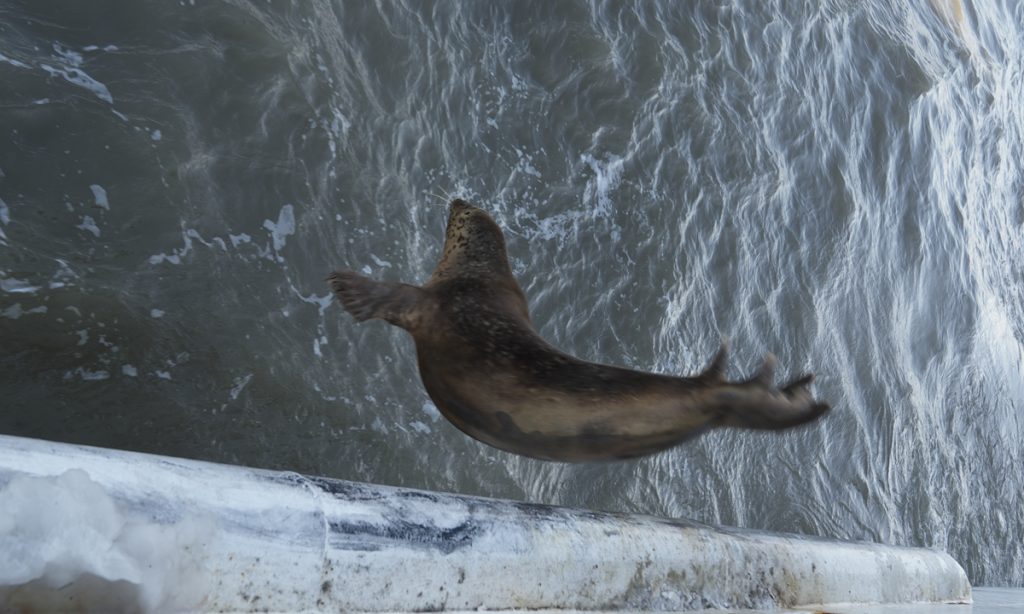
A total of 23 rescued spotted seals were released into the waters off the coast of Dalian in Northeast China’s Liaoning Province on Tuesday as part of China's continuous efforts to protect the endangered species.
The seals were previously poached and sold, but have now been rehabilitated and marked for future protection, according to the Chinese Ministry of Agriculture and Rural Affairs.
The Global Times reporters visited the releasing spot and witnessed the process. A fishery law enforcement vessel arrived at a designated sea area near Dalian on Tuesday morning, carrying the spotted seals. The seals were released one by one into the sea through a special slide set up on the ship's side. They swam freely in the waves, returning to their natural habitat.
The spotted seal is a nationally protected animal in China and is classified as an endangered species. It is the only pinniped species that can reproduce in Chinese waters and is often referred to as the "panda of the sea."
The months of November and December are the migration and breeding period for wild spotted seals, and Liaodong Bay is an important habitat for them.
Thanks to enhanced protection measures the authorities have taken in recent years, the population of spotted seals in Chinese waters has reached approximately 2,000, while the global population is estimated to be between 400,000 and 600,000.
Genetic and ecological studies have shown that these 2,000 spotted seals have unique genetic genes and belong to a separate branch of independent evolution within the global population. This makes them of significant importance for the study and research on spotted seals.
To protect this rare animal, the Liaoning Dalian Spotted Seal Wetlands were established in 1992. Covering an area of 560,000 hectares with a coastline of approximately 370 kilometers, the wetlands focus on the protection of spotted seals and their ecological environment.
In January 2002, the Liaoning Dalian Spotted Seal Wetlands were included in the List of Wetlands of International Importance. The list was indentified according to the Convention on Wetlands, an intergovernmental treaty adopted on February 2, 1971, in the Iranian city of Ramsar (thus commonly named Ramsar Convention). China joined the convention in 1992.
Now the wetlands have become a harmonious ecological haven with abundant biological resources, including various species of phytoplankton, zooplankton, and swimming animals. It is home to nationally protected species such as the spotted seal, finless porpoise, killer whales, false killer whales, common dolphins, bottlenose dolphins, and East Asian river dolphins.
Since 1992, researchers in Dalian have successfully rescued 388 spotted seals and released 299 of them back into the wild, according to media reports.